Wednesday, 24th of March 3:00-4:30pm, ZOOM LINK DISTRIBUTED THROUGH KING’S EMAIL.
Now is a good time to begin reflecting on your future career. Next week the department will be co-hosting a panel with the King’s College Alumni Association (KCLA) on careers for philosophy graduates. This is an opportunity for you to hear about the types of work recent alums of the department have gone into, and be supported on your next steps. Panellists will give some practical tips to you about applying for jobs to enable you to feel more confident. There will also be an opportunity for you to ask questions. Please find the Zoom link below.
The panel will consist of:
Hannah Bondi – Public Affairs Coordinator at the International Justice Mission, a non-governmental anti-slavery organisation.
Kristina Pakhomchik – Strategy Officer at the World Ethical Data Forum, a non-profit organisation focused on the ethical development of technology.
Esther Ezegbe – Digital Relationship Manager at ikigai, a start up app which combines wealth management and everyday banking. Founder of Root2philosophy, which aims to improve access to study philosophy for Black and minority ethnic people.
The session will be introduced and compered by Benjamin Hunt, previous President of the King’s students’ union 2016-17, who now works in education policy at the regulator for higher education, the Office for Students.
Career Panel: Philosophy Alumni Supporting you to think about your next steps
Wednesday, 24th of March 3:00-4:30pm, ZOOM LINK BELOW
Now is a good time to begin reflecting on your future career. Next week the department will be co-hosting a panel with the King’s College Alumni Association (KCLA) on careers for philosophy graduates. This is an opportunity for you to hear about the types of work recent alums of the department have gone into, and be supported on your next steps. Panellists will give some practical tips to you about applying for jobs to enable you to feel more confident. There will also be an opportunity for you to ask questions. Please find the Zoom link below.
The panel will consist of:
Hannah Bondi – Public Affairs Coordinator at the International Justice Mission, a non-governmental anti-slavery organisation.
Kristina Pakhomchik – Strategy Officer at the World Ethical Data Forum, a non-profit organisation focused on the ethical development of technology.
Esther Ezegbe – Digital Relationship Manager at ikigai, a start up app which combines wealth management and everyday banking. Founder of Root2philosophy, which aims to improve access to study philosophy for Black and minority ethnic people.
The session will be introduced and compered by Benjamin Hunt, previous President of the King’s students’ union 2016-17, who now works in education policy at the regulator for higher education, the Office for Students.
Check your email (inbox) reminder for zoom link details.
REMINDER — Department of Philosophy, King’s College London
Join us for the Annual Mark Sainsbury Lecture
Tuesday 16 March 18:00-20:00
Dominic Lopes:
Aesthetic injustice
Abstract
People with different cultures come into contact with each other, and the contacts can go well or they can go badly. Indeed, if justice is goodness in the arrangement of social life, then arrangements of social life that shape cultural contact can be just or unjust. This lecture introduces a framework for thinking about what is special in contact between aesthetic cultures, in particular, and it proposes two interests that should be built into a theory of aesthetic justice. In proof of concept, the framework is briefly applied to cultural appropriation.
Dominic Lopes is Distinguished University Scholar and Professor in the Department of Philosophy at the University of British Columbia. He has worked on pictorial representation; the aesthetic and epistemic value of pictures, including scientific images; theories of art and its value; the ontology of art; computer art and new art forms; and aesthetic value, wherever it may be found.
Join us at the Career Panel: A Philosophy Alumni Supporting you to think about your next steps
Wednesday, 24th of March 3:00-4:30pm (look out for a zoom link which will be sent by email)
Are you thinking about your next steps after graduating? Now is a good time to begin reflecting on what you might want to do next, whether this is further study or applying for jobs. The Philosophy Department, in collaboration with the KCL Alumni Association (KCLA), has organised a panel Q&A with three recent graduates to talk about their different career experiences and to give you some tips and support when you’re thinking through your next steps. The panel consists of:
Hannah Bondi – Public Affairs Coordinator at the International Justice Mission, a non-governmental anti-slavery organisation.
Kristina Pakhomchik – Strategy Officer at the World Ethical Data Forum, a non-profit organisation focused on the ethical development of technology.
Esther Ezegbe – Digital Relationship Manager at ikigai, a start up app which combines wealth management and everyday banking. Founder of Root2philosophy, which aims to improve access to study philosophy for Black and minority ethnic people.
The session will be introduced and compered by Benjamin Hunt, previous President of the King’s students’ union 2016-17, who now works in education policy at the regulator for higher education, the Office for Students.
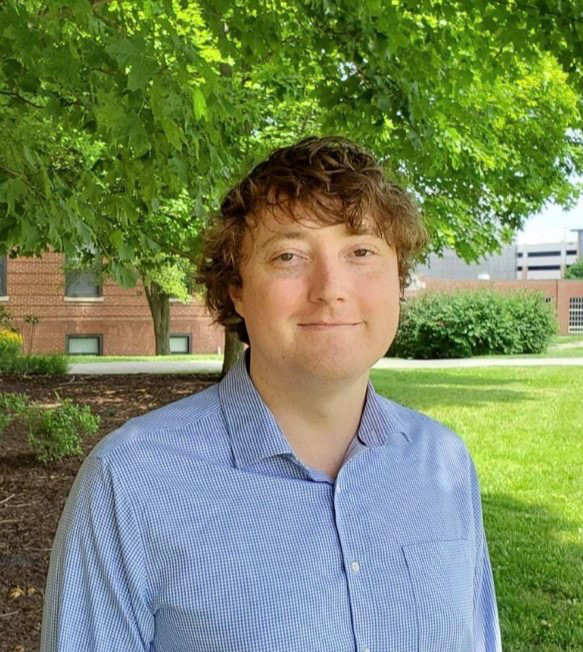
Before coming to King’s, I was a postdoctoral fellow in PPE program at Virginia Tech. The campus is located in beautiful Blacksburg, which sits right next to the Appalachian Mountains of Virginia. Before this, I completed my PhD just next door to King’s at the London School of Economics.
What will you be teaching this term?
In Semester 1 I taught History of Political Philosophy. The module considered authors chronologically but was split in two themes. The first half examined the social contract theories of Thomas Hobbes, John Locke and Jean-Jacques-Rousseau. Core themes that we considered included natural law, political obligation and legitimacy. The second half focused on accounts of freedom and unfreedom, including Mary Wollstonecraft, J. S. Mill, Frederick Douglass and Karl Marx. Core themes included the possibility for freedom in society along with how to how to diagnose and oppose forms of unfreedom.
In Semester 2 I am teaching Morality and Convention, a module that examines the role that social convention plays in morality. The module addresses the following general questions. First, what is a social convention and what is it for a convention to be in force in a given population, how are such conventions learnt or transmitted and how do they change? Second how ought we to react to the existence of a certain convention in our community? Third, how much of the social fabric of a developed society is conventional. There are norms defining family structures, games, and personal relationships (friendship, neighbourliness), systems of property rights and private law, rules of etiquette and communication etc. Are these rules, systems and norms purely conventional, partly conventional or not conventional at all?
How did you get into philosophy?
The initial spark came from music, as I recall! I remember listening to bands like The Clash midway through high school and being fascinated by the political themes in their lyrics. This led me to read around and eventually take up philosophy at A Level, where we studied Sartre’s Existential is a Humanism, along with modules such as political philosophy and epistemology. After this, I was hooked!
Your doctorate focused on the ethics of risk and uncertainty.Can you give us the 2 minute elevator pitch summarizing your contribution?
My doctorate examined a set of questions in the area of the ethics of risk and uncertainty. One of the core questions was how should the presence of risk and uncertainty affect how we distribute a benefit to which individuals have competing claims? In response, I developed and defended an egalitarian theory of distributive ethics that is sensitive to the presence of risk and severe uncertainty (where it is not possible to assign probabilities to potential outcomes). I argued that some types of risk can themselves ground complaints from those who are subject to them, whereas others cannot. I also argued that severe uncertainty (where we cannot assign a precise probability to a potential outcome) can itself constitute a burden that ought to be distributed equally where possible.
A further question of the doctorate was how one should approach doing good (such as saving some people from harm) when there is a risk that in doing so one will enable an evildoer to commit harm. I had in mind real-world cases such as the provision of United Nations humanitarian aid to civilians in Syria in 2016, where there were fears the aid would further enable the Syrian government and lead to a manipulation of the aid for nefarious purposes. I defended a “clean hands” view and argued that in the type of “villain-enabling” cases that I described, those who provide aid can do so permissibly.
How do you balance the intellectual with the practicalities of daily life?
I think I struggle to separate them! I find it easier to separate the intellectual from the mundane practicalities of daily life, but I find it difficult to separate the intellectual from my hobbies. A couple of these are Chess and the official Fantasy Premier League game (where I try to put my interest in decision-making under conditions of risk and uncertainty to use).
You write on lotteries and fairness. Recently, you suggested fairness requires weighting lottery cases to reflect weighted claims to the good. What might be counted as a weighted claim to the good for you?
A lottery is weighted when one potential recipient receives a greater chance than another. A claim is a reason why someone ought to receive a good. For example, a person will have a claim on a medicine if they need it in order to cure a disease. The weight of a claim is determined by its comparative strength. For example, if, when everything else is equal, I need the medicine twice as much than you do, then my claim can be said to be twice as weighty as yours. A weighted lottery is a way of allocating goods in proportion to this comparative strength (e.g. if I need the medicine twice as much, then I get twice as much chance than you in a lottery).
Weighted lotteries have been used for such things as school admissions in the U.S., and for the allocation of scarce COVID-19 treatments (where those who need the treatment more get a higher chance than those who need it less, but everyone still gets a chance of receiving the treatment). In a recent paper, I argue that fairness requires the use of a weighted lottery when some individuals have stronger claims to an indivisible good than others. I argue against rival positions which say either that we ought to just give the good directly to the person with the stronger claim, or that we ought to use a weighted lottery only sometimes, such as when the strength of claims to a good are only slightly unequally strong.
What is the puzzle that keeps you awake at night?
One puzzle that has been occupying me recently is how it is that a risk of harm could itself be harmful, even when the “victim” is completely unaware of the risk, and the risky action doesn’t result in the harm that it threatens. A few authors have recently argued that such risks can be harmful. I have some work in progress which tries to address this problem, where I argue that risks themselves aren’t harmful because they do not interfere with the “victim’s” interests in the right way. But this still feels a little unsatisfactory to me!
The Peter Sowerby Chair leads the Philosophy & Medicine Project, launched in 2015 with the generous support of the Peter Sowerby Foundation. The Project is a joint venture between King’s Department of Philosophy, the Faculty of Life Sciences and Medicine, and The Florence Nightingale Faculty of Nursing and Midwifery.
The Project seeks to foster interdisciplinary links between philosophy and medicine, by teaching philosophy as part of the medical curriculum, and by hosting a range of public lectures, events and activities.
The Project’s 2020 Annual Lecture, ‘What Does it Mean to Be Healthy?’, will be delivered by Robyn Bluhm (MSU), online, on December 16. For more information and to register, click here.
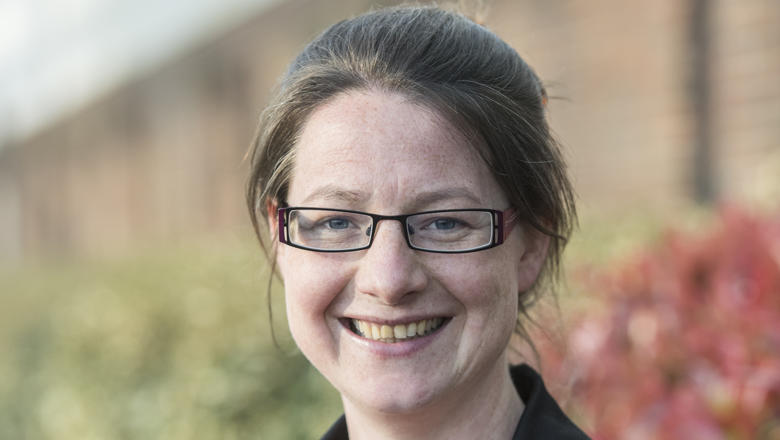
Professor Elselijn Kingma is the newly-appointed Peter Sowerby Chair in Philosophy and Medicine
The Peter Sowerby Chair leads the Philosophy & Medicine Project at King’s, launched in 2015 with the generous support of the Peter Sowerby Foundation. The Project is a joint venture between King’s Department of Philosophy, the Faculty of Life Sciences and Medicine, and The Florence Nightingale Faculty of Nursing and Midwifery.
The Project works to foster interdisciplinary links between philosophy and medicine, by teaching philosophy as part of the curriculum that trains clinicians, and by hosting a range of public lectures, events and activities, aiming to encourage dialogue and collaborative research across these fields.
Professor Kingma’s main research focuses on:
The philosophy of medicine: especially concepts of health and disease; the epistemology of evidence-based medicine; and the role of values in medical evidence and clinical decision-making.
The philosophy of pregnancy, birth and early motherhood: especially the rights and obligations of pregnant and birthing women, as well as those of their health care providers; the nature of pregnancy; and applications such as artificial gestation and contract pregnancy.
She said about her new appointment: “I look forward to consolidating the Project’s international profile as a centre of excellence in teaching and research in Philosophy and Medicine, and to advancing and disseminating Peter Sowerby’s vision for embedding philosophy in clinical teaching and training”.
Professor Kingma was previously Associate Professor in Philosophy at the University of Southampton. Between 2011 and 2019 she was Socrates Professor in Philosophy & Technology in the Humanist Tradition at the Technical University of Eindhoven, the Netherlands.
Elselijn Kingma obtained undergraduate degrees in Medicine (2004) and Psychology (2004) at Leiden University, and MPhil (2005) and PhD (2008) in History & Philosophy of Science at the University of Cambridge. She received post-doctoral training in the Department for Clinical Bioethics, National Institutes of Health (USA). Before working in Southampton she taught at King’s College London and the University of Cambridge.
Professor Kingma is lead-investigator on a five-year, 1.2 million Euro ERC Research Grant ‘Better Understanding the Metaphysics of Pregnancy (BUMP): a project at the intersection of philosophy of biology and metaphysics that investigates the metaphysical relationship between the fetus and the maternal organism. In November 2019, Kingma was awarded a Philip Leverhulme Prize to examine the metaphysical, ethical, epistemological and existential puzzles birth and pregnancy present.
The Project’s 2020 Annual Lecture will be held online on December 16. For more information and to register, click here
On the 3rd December it is the International Day of Persons with Disabilities. One of our own MA students has prepared a poster to raise awareness of the key points which you can download here or by clicking download below. To find out more about observing the day, please click here
Panellists: Sacha Golob (Reader KCL; Director CPVA); Caterina Albano (curator and a Reader at Central Saint Martins, University of the Arts London); William Badenhorst (psychoanalyst with the British Psychoanalytical Society and Honorary Senior Clinical Lecturer at Imperial College London). Chaired by: Alla Rubitel, psychoanalyst with the British Psychoanalytical Society, Honorary Senior Clinical Lecturer at Imperial College London.
Coming up in 2021:
Spring 2021: “/Origin\Forward/Slash\ – In Response to Heidegger”. An exhibition hosted by the Flat Time House Gallery in collaboration with the CPVA.
Summer 2021: “Francis Bacon and Philosophy”. A two-day conference organised by the CPVA with King’s College London and the Estate of Francis Bacon.
Summer 2021: “Sound Pictures”. A mix of performances and academic papers on multi-modal appreciation, organised by the CPVA and King’s College London. Sponsored by the British Society of Aesthetics (BSA), King’s College London and the CPVA.
Website update:
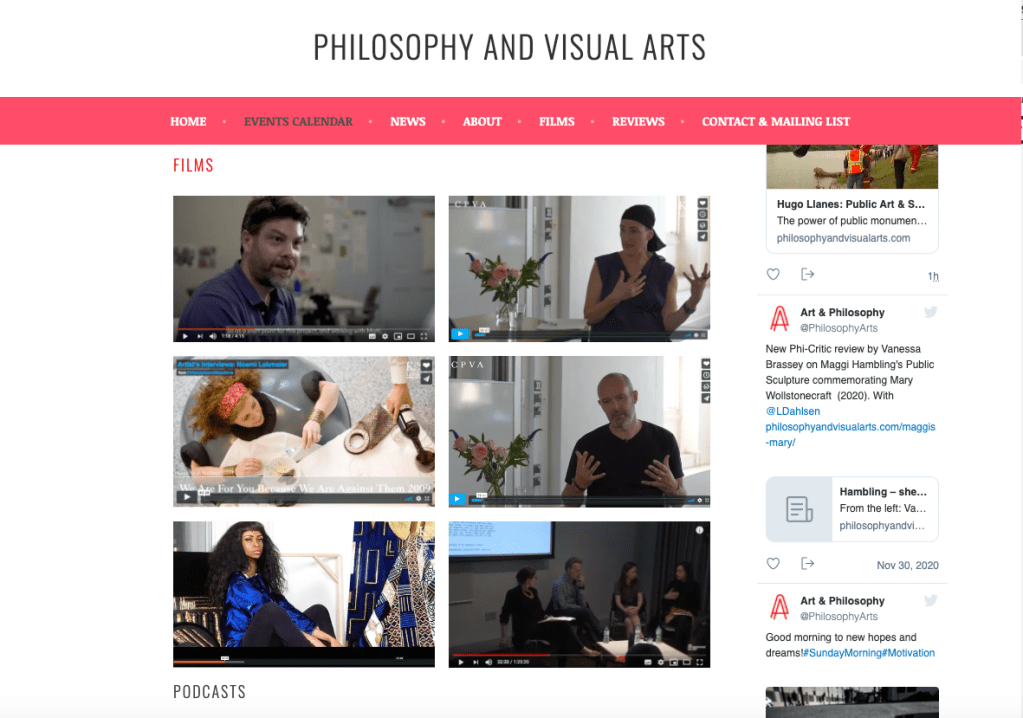
The website for the Centre for Philosophy and Visual Art at King’s College London has recently been updated. It continues to bring together academics, artists and curators to explore the connections between philosophy, theory and the visual arts, but now there are also several new films, interviews and art reviews. For example, Colette Olive (PhD candidate) has just published a review of the most recent live event “A Philosophy of sin and art” which was chaired by Sacha Golob and organised in partnership with The National Gallery .
Amrou Al-Kadhi, Panellist ‘SIN’, CPVA & National Gallery, London
To find out more about future events, and in particular, our event FEAR which will run 11th December, check out our events page.
In addition, we have launched a new series of video-interviews about practitioners who combine professional philosophical research and the making of award-winning works of art. First up is Claire Anscomb.
This week Sacha Golob (CPVA) and the National Gallery are hosting a panel discussion on Sin and Art.
Speakers include writer, drag performer and filmmaker Amrou Al-Kadhi; philosopher Deborah Casewell; art historian and Chaplain at King’s College, Cambridge, Ayla Lepine; and Director of the Centre for Philosophy and Visual Art Sacha Golob.




 King's Philosophy