REMINDER — Department of Philosophy, King’s College London
Join us for the Annual Mark Sainsbury Lecture
Tuesday 16 March 18:00-20:00
Dominic Lopes:
Aesthetic injustice
Abstract
People with different cultures come into contact with each other, and the contacts can go well or they can go badly. Indeed, if justice is goodness in the arrangement of social life, then arrangements of social life that shape cultural contact can be just or unjust. This lecture introduces a framework for thinking about what is special in contact between aesthetic cultures, in particular, and it proposes two interests that should be built into a theory of aesthetic justice. In proof of concept, the framework is briefly applied to cultural appropriation.
Dominic Lopes is Distinguished University Scholar and Professor in the Department of Philosophy at the University of British Columbia. He has worked on pictorial representation; the aesthetic and epistemic value of pictures, including scientific images; theories of art and its value; the ontology of art; computer art and new art forms; and aesthetic value, wherever it may be found.
Join us at the Career Panel: A Philosophy Alumni Supporting you to think about your next steps
Wednesday, 24th of March 3:00-4:30pm (look out for a zoom link which will be sent by email)
Are you thinking about your next steps after graduating? Now is a good time to begin reflecting on what you might want to do next, whether this is further study or applying for jobs. The Philosophy Department, in collaboration with the KCL Alumni Association (KCLA), has organised a panel Q&A with three recent graduates to talk about their different career experiences and to give you some tips and support when you’re thinking through your next steps. The panel consists of:
Hannah Bondi – Public Affairs Coordinator at the International Justice Mission, a non-governmental anti-slavery organisation.
Kristina Pakhomchik – Strategy Officer at the World Ethical Data Forum, a non-profit organisation focused on the ethical development of technology.
Esther Ezegbe – Digital Relationship Manager at ikigai, a start up app which combines wealth management and everyday banking. Founder of Root2philosophy, which aims to improve access to study philosophy for Black and minority ethnic people.
The session will be introduced and compered by Benjamin Hunt, previous President of the King’s students’ union 2016-17, who now works in education policy at the regulator for higher education, the Office for Students.
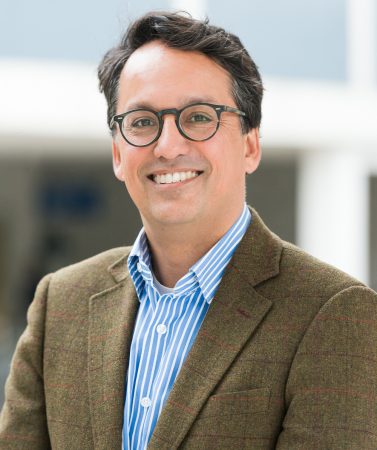
Distinguished University Scholar and Professor Dominic Lopes
The Department of Philosophy, King’s College London is delighted to welcome
Dominic Lopes
on Tuesday 16 March 18:00-20:00
for the Annual Sainsbury Lecture on the topic of
Aesthetic injustice
Dominic Lopes is Distinguished University Scholar and Professor in the Department of Philosophy at the University of British Columbia. He has worked on pictorial representation; the aesthetic and epistemic value of pictures, including scientific images; theories of art and its value; the ontology of art; computer art and new art forms; and aesthetic value, wherever it may be found.
Dominic Lopes is Distinguished University Scholar and Professor in the Department of Philosophy at the University of British Columbia. A member of the UBC aesthetics group, he has worked on pictorial representation; the aesthetic and epistemic value of pictures, including scientific images; theories of art and its value; the ontology of art; computer art and new art forms; and aesthetic value, wherever it may be found.
His most recent books are a collection of his essays on methodological themes, Aesthetics on the Edge: Where Philosophy Meets the Human Sciences, a book on Being for Beauty: Aesthetic Agency and Value, and Les Arts et les images: Dialogues avec Dominic McIver Lopes. Many of his books have been or are being translated into Chinese, Farsi, French, Japanese, and Korean. Lopes is now at work on a book on Aesthetic Injustice: A Cosmopolitan Theory. He is also co-authoring Aesthetic Life and Why It Matters with Bence Nanay and Nick Riggle and The Geography of Taste with Samantha Matherne, Mohan Matthen, and Bence Nanay. Both books will be published by OUP.
The Peter Sowerby Chair leads the Philosophy & Medicine Project, launched in 2015 with the generous support of the Peter Sowerby Foundation. The Project is a joint venture between King’s Department of Philosophy, the Faculty of Life Sciences and Medicine, and The Florence Nightingale Faculty of Nursing and Midwifery.
The Project seeks to foster interdisciplinary links between philosophy and medicine, by teaching philosophy as part of the medical curriculum, and by hosting a range of public lectures, events and activities.
The Project’s 2020 Annual Lecture, ‘What Does it Mean to Be Healthy?’, will be delivered by Robyn Bluhm (MSU), online, on December 16. For more information and to register, click here.
Professor Elselijn Kingma is the newly-appointed Peter Sowerby Chair in Philosophy and Medicine
The Peter Sowerby Chair leads the Philosophy & Medicine Project at King’s, launched in 2015 with the generous support of the Peter Sowerby Foundation. The Project is a joint venture between King’s Department of Philosophy, the Faculty of Life Sciences and Medicine, and The Florence Nightingale Faculty of Nursing and Midwifery.
The Project works to foster interdisciplinary links between philosophy and medicine, by teaching philosophy as part of the curriculum that trains clinicians, and by hosting a range of public lectures, events and activities, aiming to encourage dialogue and collaborative research across these fields.
Professor Kingma’s main research focuses on:
The philosophy of medicine: especially concepts of health and disease; the epistemology of evidence-based medicine; and the role of values in medical evidence and clinical decision-making.
The philosophy of pregnancy, birth and early motherhood: especially the rights and obligations of pregnant and birthing women, as well as those of their health care providers; the nature of pregnancy; and applications such as artificial gestation and contract pregnancy.
She said about her new appointment: “I look forward to consolidating the Project’s international profile as a centre of excellence in teaching and research in Philosophy and Medicine, and to advancing and disseminating Peter Sowerby’s vision for embedding philosophy in clinical teaching and training”.
Professor Kingma was previously Associate Professor in Philosophy at the University of Southampton. Between 2011 and 2019 she was Socrates Professor in Philosophy & Technology in the Humanist Tradition at the Technical University of Eindhoven, the Netherlands.
Elselijn Kingma obtained undergraduate degrees in Medicine (2004) and Psychology (2004) at Leiden University, and MPhil (2005) and PhD (2008) in History & Philosophy of Science at the University of Cambridge. She received post-doctoral training in the Department for Clinical Bioethics, National Institutes of Health (USA). Before working in Southampton she taught at King’s College London and the University of Cambridge.
Professor Kingma is lead-investigator on a five-year, 1.2 million Euro ERC Research Grant ‘Better Understanding the Metaphysics of Pregnancy (BUMP): a project at the intersection of philosophy of biology and metaphysics that investigates the metaphysical relationship between the fetus and the maternal organism. In November 2019, Kingma was awarded a Philip Leverhulme Prize to examine the metaphysical, ethical, epistemological and existential puzzles birth and pregnancy present.
The Project’s 2020 Annual Lecture will be held online on December 16. For more information and to register, click here
This week Sacha Golob (CPVA) and the National Gallery are hosting a panel discussion on Sin and Art.
Speakers include writer, drag performer and filmmaker Amrou Al-Kadhi; philosopher Deborah Casewell; art historian and Chaplain at King’s College, Cambridge, Ayla Lepine; and Director of the Centre for Philosophy and Visual Art Sacha Golob.
KCL Minorities and Philosophy Society are pleased to be hosting Dr Adam Eliott-Cooper’s talk on ‘Postcolonial British Policing: Racism, State Power and the Legacies of the British Empire’ followed by a Q&A.
The event is free to attend and will take place on Microsoft Teams on Tuesday the 13th of October from 7-8pm.
Click here to join the MS Team call or click ‘interested’ on the Facebook event for a reminder nearer the time.
Adam is currently a research associate at the University of Greenwich. He received his PhD from the School of Geography and the Environment, University of Oxford, in 2016. He has previously worked as a researcher in the Department of Philosophy at UCL, as a teaching fellow in the Department of Sociology at the University of Warwick and as a research associate in the Department of Geography at King’s College London.
Adam’s scholarly interests include postcolonialism, urban theory and social movements. His current research focuses on anti-racism and British policing, both on the British mainland and in Britain’s colonies.
Find out more from KCL Minority and Philosophy Society: like them on Facebook or follow them on Instagram.
Epidemiological models have been frequently mentioned in the media lately. What are they? And how do they work? Professor Alexander Bird with the Sowerby/King’s Philosophy & Medicine project has helpfully produced this introduction to epidemiological modelling for the layperson.
The particular model he will be looking at is the SIR model developed by Kermack and McKendrick in 1927.
Here’s a link to the project. Professor Bird has also produced a paper to accompany the video which is available here.
As everyone is locked up, Clayton Littlejohn has been helpfully recording and gather talks on some recent work in philosophy. This talk is an informal presentation of a paper written with Julien Dutant on epistemic rationality and defeat. It presents a new unified theory of defeat according to which the toxicity of rationality defeaters has to do with the way in which they serve as indicators that we cannot know certain things. The paper engages with recent work on epistemic paradoxes, epistemic rationality, and recent work on defeat.
If you are interested, there are more videos available here.
The Philosophy and Medicine Colloquium will be meeting on the 17th of March to hear a talk by Dr Robin Durie, University of Exeter. Dr Durie is a member of the Lancet Commission on the Value of Death
17 March 2020 – 17:00-18:30 in the Large Committee Room, Hodgkin Building, Guy’s Campus
If you do not have a KCL ID, please register (free) at this Link.
The Lancet Commission on The Value of Death argues that contemporary society has developed an unhealthy relationship with death due in part to the over-medicalisation of death and dying. Amongst the signs of this unhealthy relationship are the ever increasing amounts of healthcare budgets that are spent on prolonging the lives of those who are dying, with seemingly little or no regard for the quality of the life being prolonged; the investment in the search for immortality amongst the very richest in society, at the same time as the poorest are denied access to even the most basic provision of palliative care; and the gradual shift of the experience of dying from communities and families to hospitals. The core problem of this Lancet Commission is one to which philosophy can make a unique contribution, not least because philosophy has, from its very inception in the work of Plato, understood itself as a “practice for death”. And yet, philosophers such as Spinoza have also argued that “philosophy thinks of death least of all things”. In the first part of this discussion, I will explore this tension in philosophy’s approach towards death; then, I will draw on some more contemporary thinkers, such as Georges Canguilhem, in order to develop a philosophical position from which it may be possible to begin valuing death anew.



 King's Philosophy