• About
  • News
  • Events
    • Seminars
    • Public talks
  • Research
    • Formal Methods
    • Moral, Legal, and Political Philosophy
    • History of Philosophy
    • Rationality, Action, and Mind
    • Metaphysics and Science
  • Ideas
    • Interviews
    • Essays
  • Resources
  • Department Events Calendar

King's Philosophy

~ Official blog of the philosophy department at King's College London.

King's Philosophy

Category Archives: News

Philosophy and Medicine Colloquium: Robin Durie, University of Exeter

28 Friday Feb 2020

Posted by fmallory in Announcements, Events, Ideas, News, Public talks, Uncategorized

≈ Leave a comment

The Philosophy and Medicine Colloquium will be meeting on the 17th of March to hear a talk by Dr Robin Durie, University of Exeter. Dr Durie is a member of the Lancet Commission on the Value of Death

17 March 2020 – 17:00-18:30 in the Large Committee Room, Hodgkin Building, Guy’s Campus

If you do not have a KCL ID, please register (free) at this Link.

The Lancet Commission on The Value of Death argues that contemporary society has developed an unhealthy relationship with death due in part to the over-medicalisation of death and dying. Amongst the signs of this unhealthy relationship are the ever increasing amounts of healthcare budgets that are spent on prolonging the lives of those who are dying, with seemingly little or no regard for the quality of the life being prolonged; the investment in the search for immortality amongst the very richest in society, at the same time as the poorest are denied access to even the most basic provision of palliative care; and the gradual shift of the experience of dying from communities and families to hospitals. The core problem of this Lancet Commission is one to which philosophy can make a unique contribution, not least because philosophy has, from its very inception in the work of Plato, understood itself as a “practice for death”. And yet, philosophers such as Spinoza have also argued that “philosophy thinks of death least of all things”. In the first part of this discussion, I will explore this tension in philosophy’s approach towards death; then, I will draw on some more contemporary thinkers, such as Georges Canguilhem, in order to develop a philosophical position from which it may be possible to begin valuing death anew.
Industrial Action in the Philosophy Department

21 Friday Feb 2020

Posted by fmallory in Announcements, News

≈ Leave a comment

As announced last week, industrial action is set to take place for four weeks, as follows:

  • First Week (3 days)
    Monday 24, Tuesday 25 and Wednesday 26 February
  • Second week (4 days)
    Monday 2, Tuesday 3, Wednesday 4 and Thursday 5 March
  • Third week (5 days)
    Monday 9, Tuesday 10, Wednesday 11, Thursday 12 and Friday 13 March
  • Fourth week (2 days)
    Thursday 19 and Friday 20 March

Your lecturers and GTAs may have notified you of what will happen for their specific modules and seminars; if not, you are very welcome to ask them but please bear in mind that staff are not required to inform the College or students of their intention to strike. 

Where teaching is cancelled, we will ensure that it is possible to complete your summative assessment on topics for which teaching has taken place. Details of this will be shared with you soon.

For teaching not impacted by the industrial action, attendance will still be monitored as usual. The Student Attendance and Engagement Policy will continue to apply to all students. However, if you feel uncomfortable crossing a picket line to attend teaching, you should inform the department directly via email:philosophy@kcl.ac.uk.

We expect libraries, computer rooms and services such as student services and advice to be available throughout the industrial action. Should you wish to, you might find it helpful also to engage in one or more of the following:

·         Set up a study group for your class. More information on how to do it is attached.

·         Attend your lecturers/personal tutor office hours outside of strike times.

·         Book a space on one (or more) of the academic skills workshops listed here

·         Book a one-to-one session with a Study Skills Leader

Please see the FAQs for students for further information and if you have any specific queries not covered there, please send them to questions@kcl.ac.uk.

BBLOC Philosophy of Physics Seminar Series

07 Friday Feb 2020

Posted by alexrfranklin in Announcements, Events, News, philosophy of science, Public talks, Research, Seminars

≈ Leave a comment

The Birmingham-Bristol-London-Oxford-Cambridge Philosophy of Physics Seminar Series is restarting! This is a research seminar for philosophers of physics across the South of England to meet each term, hosted at King’s College London. 

The next two events will take place on Monday 23rd March at 5pm in Bush House (SE) 1.02 and Thursday 21st May at 4:30pm in K2.40, King’s Building, KCL Strand Campus. The speakers will be Emily Adlam and James Read.

For more details see: https://kingsphilosophy.com/bbloc/

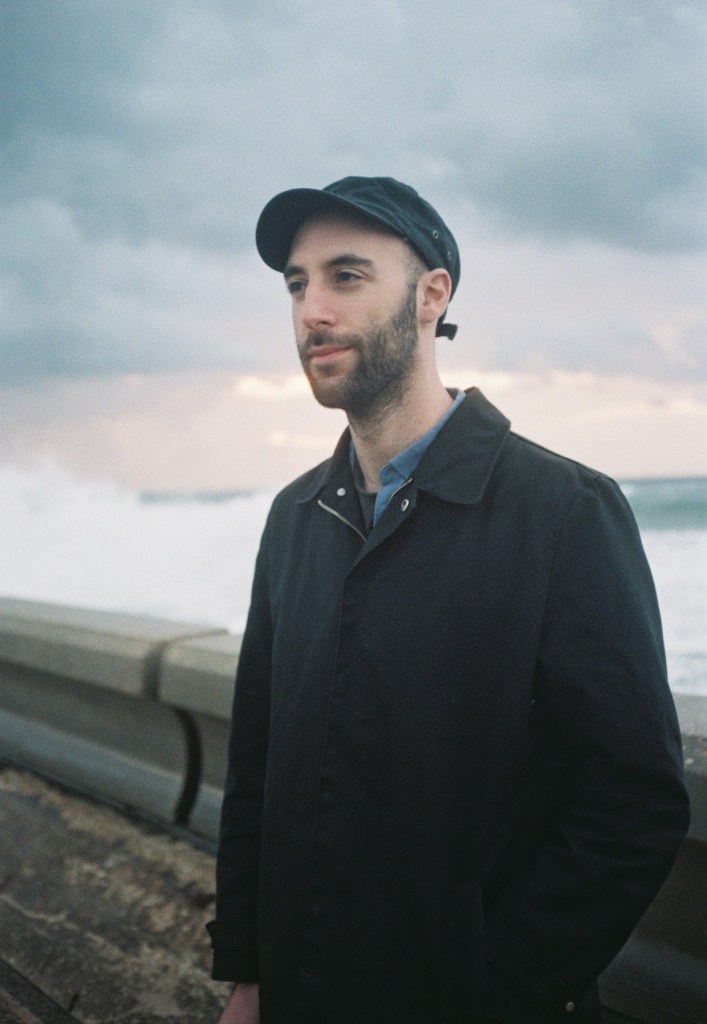
New to the Department: Alexander Franklin

06 Thursday Feb 2020

Posted by fmallory in Announcements, Ideas, News, Research, Uncategorized

≈ Leave a comment

Photo by Justin Hamilton

Where where you before coming to King’s?

I did my PhD and MPhilStud at King’s, so I’ve been here since 2013. However, most recently I came here from Bristol where I was a postdoc on a project with the grand title ‘The Metaphysical Unity of Science’. The great thing about that project is that it allowed me to work on my own research while also giving me the chance to collaborate with the other postdocs (Vanessa Seifert and Toby Friend) on exciting topics. The products of these collaborations should be completed soon!

How did you become interested in philosophy?

I’m lucky enough to have been introduced to philosophy from a very young age by my dad (who also has a PhD in philosophy). Throughout my childhood and later life we’d go on walks on Hampstead Heath discussing philosophy (though not necessarily calling it that) as well as various religious Jewish texts. So, it’s not clear to me that I’ve ever not been into philosophy. The choice to study philosophy professionally was likely motivated in part by the desire to keep up with the conversations when Oliver Black (a schoolfriend of my Dad’s) would join us on these walks! But I really became excited when, as an undergraduate, I started learning about the philosophy of physics!

Your work involves the role of emergence in science, do you think there is a single concept of emergence applicable across different levels of scientific explanation or are we talking about different things? 

That’s a good question, and a difficult one to answer. In my more hubristic moments, I think that everyone is talking about the same thing, and that the account of it that I defend with Eleanor Knox, is the one to which everyone should appeal! I do think that many of the uses of the term ‘emergence’ across science have a lot in common with each other, and that, if one wants to use the philosophical jargon, scientists are mainly talking about weak ontological emergence (in its synchronic or diachronic forms). I think that strong emergence is almost exclusively found within philosophy (and that’s one reason to be sceptical of it!). Having said all that, it’s worth noting that I’ve read much more physics than any other science, and so my views should not be taken to result from a systematic study of the literature. 

It has been argued in the past that special sciences are autonomous from more fundamental sciences. Do you think that we can ever give an explanation of this autonomy or will it remain a mystery?

The boring answer to this question is that it depends on how ‘autonomy’ is defined. A fair few philosophers assume (explicitly or implicitly) that autonomy is the kind of thing that just can’t be explained – that if a science is autonomous then the relations between it and the lower-level sciences aren’t the sorts of relation which allow for explanation of that autonomy. My view is that, while there’s a sense in which the special sciences are clearly autonomous, that’s a sense which is compatible with explaining how that autonomy comes about. 

The basic idea is that autonomy corresponds to a kind of stability: my desk is autonomous because it will look the same even while its constituent particles are continually jiggling about. So part of explaining autonomy is explaining why the jiggling about of the particles just doesn’t make a difference to the macroscopic properties of the table. Once we’ve made this conceptual shift, then we can repurpose a great many scientific explanations to explanations of autonomy: the table’s autonomy is explained by the theories which tell us about how the particles are arranged in a lattice, and how wood is cohesive etc. I’ve written a paper about this that’s currently under review, so hopefully it’ll all be public soon!

Is there a philosophical idea that you endorse and that most people don’t but should?

I think that there may well be no fundamental level – that we may continue describing the world ever more precisely for ever and ever!

King’s College London Peace Lecture: Prof Cécile Fabre (10th of March)

05 Wednesday Feb 2020

Posted by fmallory in Announcements, Events, Ideas, News, Research

≈ Leave a comment

The King’s College London Peace Lecture will be given this year by Prof Cécile Fabre on the topic, ‘Snatching Something From Death’: Value, Justice, and Humankind’s Common Heritage

Professor Fabre is a Senior Research Fellow of All Souls College, Oxford,  Professor of Political Philosophy at the University of Oxford and a Fellow of the British Academy. She is the author of Justice in a Changing World, Whose Body is it Anyway? Justice and the Integrity of the Person, and in 2012 Cosmopolitan War.

Cécile Fabre has just completed an eight year long project on the ethics of war and peace. She is also working on the ethics of economic statecraft and on the ethics of espionage.

The lecture will be in Bush House Lecture Theatre 1 on Tuesday the 10th of March

The lecture will begin at 6.30pm till 8pm with a reception afterwards

Abstract

When Notre-Dame Cathedral was engulfed by fire on April 15, 2019, the world (it seemed) watched in horror. On Twitter, Facebook, in newspapers and on TV cables ranging as far afield from Paris as South Africa, China and Chile, people expressed their sorrow at the partial destruction of the church, and retrospective anguish at the thought of what might very well have happened – the complete loss of a jewel of Gothic architecture whose value somehow transcends time and space. My aim in this lecture is to offer a philosophical account and defence of the view that there is such a thing as humankind’s common heritage, and that this heritage makes stringent moral demands on us. I first offer an account of the universal value of (some) heritage goods, and then offer a conception of justice at the bar of which we owe it to one another, but also to our ancestors and successors, to preserve that heritage.

Peter Adamson: From Known to Knower

31 Friday Jan 2020

Posted by fmallory in Announcements, Events, History of Philosophy, Ideas, News, Uncategorized

≈ Leave a comment

Peter Adamson (KCL, LMU Munich) will be speaking to the department about on Friday 28th February, 3-5pm in Room 508 of the Philosophy Building.

The title of his talk is “From Known to Knower: Affinity Arguments for the Mind’s Incorporeality in the Islamic World”

Prof. Adamson’s latest book Classical Indian Philosophy will be released by Oxford University Press in March.

Philosophy in Medical Education Conference

28 Tuesday Jan 2020

Posted by fmallory in Announcements, Events, Ideas, News, Uncategorized

≈ Leave a comment

The organisers of the conference Philosophy in Medical Education are pleased to invite abstract submissions. The conference is due to take place at King’s College London on the 6th – 8th of April 2020. 

The conference will look at the role and the details of teaching philosophy as part of the curriculum of medical schools. We invite abstracts of papers on all aspects of this topic, from, for example, papers on the value of philosophy in medical education to papers on specific teaching topics to reports of experiences of teachers and students, and so on. We welcome interdisciplinary submissions. 

Abstracts of up to 300 words should be sent to PhilAndMed@kcl.ac.uk  by 14 February 2020.  We will select papers for inclusion in the conference as soon as possible after that date. 

We will have some funding for bursaries to support the participation of graduate students and early career researchers. General inquiries can be directed to harriet.fagerberg@kcl.ac.uk. 

Women Intellectuals in Antiquity

23 Thursday Jan 2020

Posted by fmallory in Announcements, Events, News, Uncategorized

≈ Leave a comment

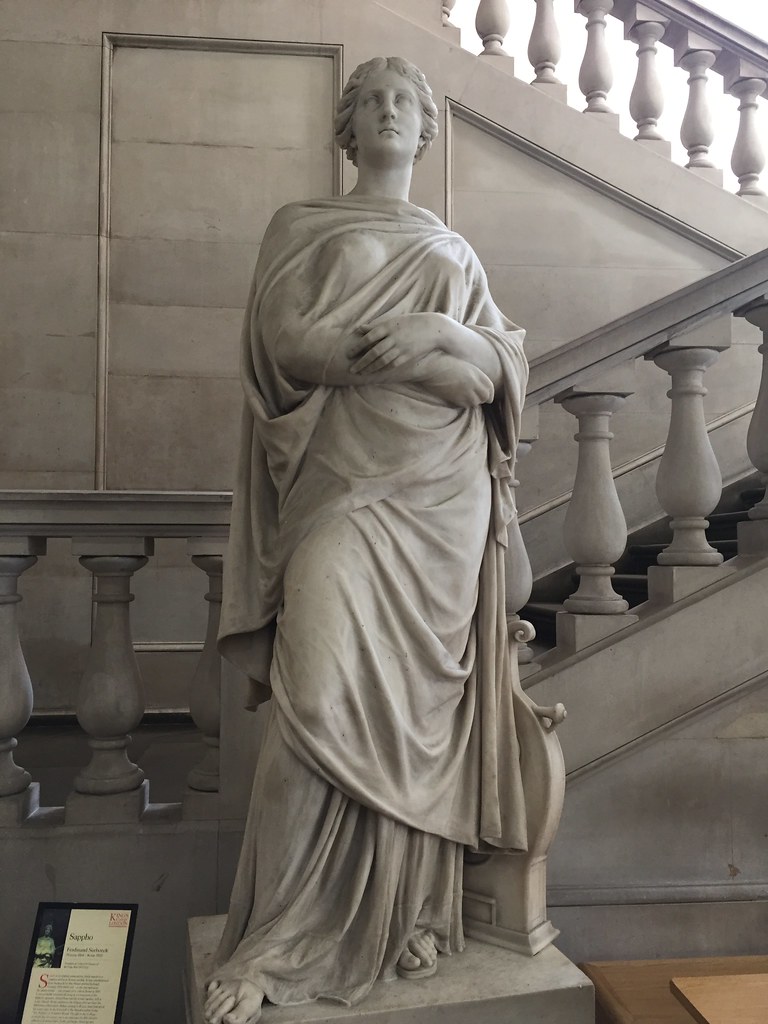
Image result for Sappho statue kings

Dr Katharine O’Reilly will be co-organising a conference on Women Intellectuals in Antiquity at the University of Oxford next month (14th-15th Feb). The symposium aims to bring together scholars from across the humanities disciplines to discuss women intellectuals in Antiquity and will feature keynote lectures from Dr. Danielle Layne and Dr. Sophia Connell, and a panel discussions led by Armand D’Angour.

Katharine notes: “The event is really a first, and many of the women philosophers we’re discussing are mostly unknown outside a very small circle, so we’re very excited to be running this”.

To see the event announcement on PhilEvents, click here.

The programme for the event is here and to register, click here.

Registration, including lunch and coffees, is free for students.

King’s is one of the few philosophy departments to offer a course dedicated to Women Thinkers in Antiquity and the Middle Ages. Hopefully this symposium will call greater attention to this research in this field.

For any questions, please email WomenIntellectualsInAntiquity@gmail.com

This event is jointly organised by Jenny Rallens, Peter Adamson, Katharine O’Reilly, and Ursula Coope with the support of Keble College Oxford, the British Society for the History of Philosophy (BSHP), The Oxford Research Centre in the Humanities (TORCH), Oxford University, the Department of Classics at King’s College London, and LMU Munich.  

Reading Groups this Term

22 Wednesday Jan 2020

Posted by fmallory in Announcements, Ideas, News, Reading Groups, Research, Uncategorized

≈ Leave a comment

The zoom and download functions are not active for this image.

This term will see a host of reading groups, some familiar, some new, all open to everyone. So why not drop by? 

Philosophy of Action

Monday 1pm, Room 508, Philosophy Building

Focus: Go beyond the ‘Standard Story’?

Email:  daniel.elbro@kcl.ac.uk, william.meredew@kcl.ac.uk or chengying.guan@kcl.ac.uk

Philosophy of Medicine

Thursday, 4pm, Room 508, Philosophy Building

Email: harriet.fagerberg@kcl.ac.uk

Philosophy of Race

Thursday, 10am, Room 508, Philosophy Building

Email: mirjam.faissner@kcl.ac.uk

(Mostly) Metaphysics  Reading Group

Wednesday, 12:30-2pm, Room 508, Philosophy Building

Email: roope-kristian.ryymin@kcl.ac.uk

Philosophy of Mind

Wednesday, 11am, Room 508, Philosophy Building  

Email: patrick.butlin@kcl.ac.uk

Phenomenology in Analytic Philosophy

Wednesday 3pm, Room 508, Philosophy Building

Email: gregor.boes@kcl.ac.uk

Minorities and Philosophy

Venue varies

Email: alice.c.wright@kcl.ac.uk 

A Spirit of Trust

Time and place to be determined [starting after the reading week]

Email: fintan.mallory@kcl.ac.uk

King’s History of Philosophy Workshop: Self, Soul and World in the History of Philosophy

21 Tuesday Jan 2020

Posted by fmallory in Announcements, Events, Kant, News, Uncategorized

≈ Leave a comment

Image result for rene magritte self portrait

The department will be hosting a workshop on the theme ‘Self, Soul and World in the History of Philosophy’ on Friday the 13th of March.All are welcome, but please sign up here: 
https://www.eventbrite.com/e/kings-history-of-philosophy-workshop-on-the-self-tickets-90376676071

The programme is as follows:

10.00-11.15 John Callanan: Kant’s Metaphysics of the Self

Abstract: Kant is traditionally viewed as a critic of the metaphysics of the soul and a proponent of a non-metaphysical conception of selfhood. In recent decades however, many commentators have interpreted Kant as being committed to a metaphysics of the self. I review some of these recent interpreters and consider how their views might be reconciled with the Critical project’s approach to metaphysical explanation. 

11.30 -12.45 Mark Textor: Lotze’s Master Argument: From the Unity of Consciousness to the Soul

Abstract: Influential 19th century German philosophers of mind promoted the idea of ‘a psychology without a soul’. Hermann Lotze is their main opponent. He argued that this project is doomed. In my talk I will assess his main argument.

Lunch break (own arrangements)

14.15-15.30 Rory Madden:  Frege on Idealism and the Self

Abstract: It is not widely known that Frege’s ‘Thought’ contains an argument which, in the tradition of Kant’s Refutation of Idealism, aims to refute a sceptical or idealist hypothesis on the basis of premises about self-consciousness.  In this talk I reconstruct and assess Frege’s argument.

15.45 – 17.00 Nilanjan Das: Can we Coherently Deny the Existence of the Self?

Abstract: Indian Buddhist philosophers defended the thesis that there is no substantially or ultimately real thing such as a self. The non-Buddhist Brahmanical philosophers resisted this claim. In this essay, I focus on one such philosopher: the 6th century Nyāya philosopher, Uddyotakara. He argued that the Buddhists cannot coherently deny the existence of the self, i.e., that the statement “The self doesn’t exist” involves a contradiction. Here, I unpack Uddyotakara’s arguments for this surprising thesis. I show that the thesis follows from three distinct components of his philosophy of language: (i) his semantics of negative existentials, (ii) his theory of how the first-person pronoun works, and (iii) his view that simple expressions of language must have referents.

← Older posts
Newer posts →

Tags

ancient philosophy Andrea Sangiovanni applied ethics art Art and Philosophy British Society for the History of Philosophy Clayton Littlejohn conference conferences David Papineau early modern philosophy employment epistemology ethics Events formal epistemology Formal Methods graduate students guest speakers History of Philosophy Hobbes interview Jessica Leech jobs John Callanan Julien Dutant Kant KHOP Maria Rosa Antognazza Mark Textor metaphysics Michael Beaney migration MM McCabe performance art Philosophy Philosophy and Medicine Philosophy in Prisons philosophy of language philosophy of mathematics philosophy of mind political philosophy prizes publications public lecture radio Research at King's Sacha Golob Sarah Fine workshop

Recent Posts

  • Dan Zeman on New Applications of the Assessment-Sensitivity Framework
  • Fabrice Correia and Sven Rosenkranz on Higher-Order Tense Realism
  • Nikolaj Jang Lee Linding Pedersen on AI Epistemology
  • Lowkey Logoian informal: one-day workshop on Aristotelian matters
  • Man-Devil, By John Callanan, Book Launch

Archives

  • November 2025
  • October 2025
  • July 2025
  • March 2025
  • February 2024
  • November 2023
  • July 2023
  • May 2023
  • March 2023
  • February 2023
  • January 2023
  • November 2022
  • October 2022
  • September 2022
  • August 2022
  • July 2022
  • June 2022
  • May 2022
  • April 2022
  • March 2022
  • February 2022
  • January 2022
  • December 2021
  • November 2021
  • October 2021
  • September 2021
  • July 2021
  • June 2021
  • May 2021
  • April 2021
  • March 2021
  • January 2021
  • December 2020
  • November 2020
  • October 2020
  • September 2020
  • July 2020
  • June 2020
  • May 2020
  • April 2020
  • March 2020
  • February 2020
  • January 2020
  • December 2019
  • November 2019
  • October 2019
  • September 2019
  • April 2019
  • March 2019
  • February 2019
  • January 2019
  • December 2018
  • November 2018
  • October 2018
  • September 2018
  • July 2018
  • June 2018
  • May 2018
  • April 2018
  • March 2018
  • February 2018
  • January 2018
  • December 2017
  • November 2017
  • October 2017
  • September 2017
  • August 2017
  • July 2017
  • June 2017
  • May 2017
  • April 2017
  • March 2017
  • February 2017
  • January 2017
  • December 2016
  • November 2016
  • October 2016
  • September 2016
  • June 2016
  • May 2016
  • April 2016
  • March 2016
  • February 2016
  • October 2015
  • September 2015
  • July 2013
  • May 2013

Categories

  • Announcements
  • Conference reports
  • Essays
  • Events
  • Formal Methods
  • History of Philosophy
  • Ideas
  • Interviews
  • Kant
  • KHOPS
  • Mind, Metaphysics, Psychology
  • News
  • philosophy of science
  • Public engagements
  • Public talks
  • Rationality
  • Reading Groups
  • Research
  • Resources
  • Seminars
  • Uncategorized
  • Workshops

A WordPress.com Website.

  • Subscribe Subscribed
    • King's Philosophy
    • Join 241 other subscribers
    • Already have a WordPress.com account? Log in now.
    • King's Philosophy
    • Subscribe Subscribed
    • Sign up
    • Log in
    • Report this content
    • View site in Reader
    • Manage subscriptions
    • Collapse this bar
 

Loading Comments...