• About
  • News
  • Events
    • Seminars
    • Public talks
  • Research
    • Formal Methods
    • Moral, Legal, and Political Philosophy
    • History of Philosophy
    • Rationality, Action, and Mind
    • Metaphysics and Science
  • Ideas
    • Interviews
    • Essays
  • Resources
  • Department Events Calendar

King's Philosophy

~ Official blog of the philosophy department at King's College London.

King's Philosophy

Category Archives: Announcements

Oxford Think Festival Reading List

16 Monday Dec 2019

Posted by fmallory in Announcements, Ideas, News, Public engagements, Uncategorized

≈ Leave a comment

Dr Sarah Fine

As part of the Oxford Think Festival, Oxford University Press have curated an article reading list in order to celebrate the quest for knowledge. This year, the reading list features three King’s staff and alumni whose work spans issues from language loss and pregnancy to refugees. The articles are:

Refugees, Safety, and a Decent Human Life by Sarah Fine punished in the Proceedings of the Aristotelian Society [Senior Lecturer in Philosophy]

Language Loss and Illocutionary Silencing by Ethan Nowak published in Mind [Leverhulme Early Career Researcher]

Were You a Part of Your Mother? by Elselijn Kingma published in Mind [former KCL postdoc]

All articles are currently free to read at this link.

Inaugural London Post-Kantian Workshop

03 Tuesday Dec 2019

Posted by fmallory in Announcements, Events, History of Philosophy, Kant, News, Workshops

≈ Leave a comment

Image result for kant

On the 10th of December, King’s will be hosting the inaugural London Post-Kantian workshop on the topic ‘Philosophy’s Relationship to Pre-Philosophical Experience’. The workshop will feature papers on Kant, Hegel, and Wittgenstein.

Programme  

1000-1015: Welcome to LPKS and King’s

1015-1130: Stephen Houlgate (Warwick) ‘The Presuppositions of Hegel’s Presuppositionless Logic’

1130-1200: Refreshments

1200-1315: Danièle Moyal-Sharrock (Herts) ‘Wittgenstein’s Non-Intellectual Epistemology’

1315-1415: Lunch at KCL (Provided)

1415-1530: Sacha Golob (KCL) ‘Innocence and the Phenomenological Method’

1530-1545: Break

1545-1700: Martin Sticker (Bristol) ‘Kant on the Common Rational Cognition of Duty Prospects and Problems’

1700-1730: Group Discussion of LPKS Future Events

1730: Close, Drinks.

Location

Tuesday 10th December, Small Committee Room, Strand Campus, King’s College London

Registration

Please Register at https://www.eventbrite.co.uk/e/lpks-workshop-1-philosophys-relationship-to-pre-philosophical-experience-tickets-74960215021

Maps and Access https://www.kcl.ac.uk/visit/strand-campus

Questions to londonpostkantianseminar@gmail.com

Philosophy and Medicine Colloquium: Miriam Solomon (Temple University, USA)

01 Sunday Dec 2019

Posted by fmallory in Announcements, Events, News, Public talks

≈ Leave a comment

Image result for kcl philosophy and medicine

“On Validators for Psychiatric Categories”  Thursday 5 December 2019, 17.00–18.30 

The concept of a validator for a psychiatric category developed in the second half of the twentieth century and is still in use. Surprisingly, the term “validator” has never been explicitly defined in the psychiatric literature. Moreover, although lists of different kinds of validators have often been stated, there has been no explicit discussion in the literature about how different kinds of validator evidence should be aggregated in a decision about how to create, revise, or remove a psychiatric category. The goal of this paper is to trace the development of the concept of a psychiatric validator, showing how our understanding has changed over time. With this in mind, I evaluate possible recommendations for aggregating validator evidence.

PHILOSOPHY AND MEDICINE COLLOQUIUM

Miriam Solomon (Temple University, USA)

Thursday 5 December 2019, 17.00–18.30 

Council Room, King’s Building, Strand Campus, King’s College London

Registration for people without King’s ID: https://www.eventbrite.co.uk/e/miriam-solomon-on-validators-for-psychiatric-categories-tickets-79879316185?utm_term=eventurl_text

Philosophy and Medicine Colloquium: Stephen John (HPS Cambridge)

26 Tuesday Nov 2019

Posted by fmallory in Announcements, Events, News, Public talks, Uncategorized

≈ Leave a comment

Image result for kcl philosophy and medicine

“Offers, requests and certainties (in the prevention and treatment of cancer, for example)” Thursday, 28th November

Doctors are sometimes permitted to give patients early detection tests which are not judged safe and effective enough to be used in screening programmes. Pharmaceutical companies are sometimes permitted to give patients drugs which are not yet approved by regulators. On the face of it, these cases seem examples of a more general phenomenon explored in recent philosophy of science under the heading of “inductive risk”, where appropriate standards of certainty are fixed by non-epistemic aspects of our situation. However, standard discussions of inductive risk focus on the consequences of different epistemic errors. This doesn’t look like a helpful way of thinking through our cases. This paper suggests an alternative: that there is a difference between the ethics of responding to requests and the ethics of making an offer. In the former case, considerations of autonomy are key; in the latter, considerations of non-maleficence. In turn, these deontic differences have important epistemic implications. This paper develops these ideas, noting their relevance to a range of practices around the prevention, detection and treatment of cancer.

PHILOSOPHY AND MEDICINE COLLOQUIUM

Thursday 28 November 2019, 17.00–18.30

Bush House (S) 2.02, Strand Campus

Registration for people without King’s ID: https://www.eventbrite.co.uk/e/stephen-john-on-offers-requests-and-certainties-tickets-79877871865?utm_term=eventurl_text

New to the Department: Mirjam Müller, Lecturer in Political Theory

25 Monday Nov 2019

Posted by fmallory in Announcements, Ideas, Interviews, News

≈ Leave a comment

Where were you before coming to King’s?

Before coming to King’s I was a postdoc in Political Theory at Free University Berlin, having completed my PhD at Humboldt University in Political Philosophy the year before.

How did you get into philosophy?

By accident. I moved from politics to political theory to political philosophy/feminist philosophy and here I am. More substantially: I got passionate about philosophy because it helps me to make sense of the social world and it allows me to get a better understanding of the political struggles of our times.

You’ve written about the exploitation of emotional labour in hierarchical social relations. Could you tell us a bit about this?

For me, exploitation is intimately linked to power. On my understanding, one party exploits another if her position of power allows her to gain benefits from another party that she could not have gotten absent the power relation. Gender specific exploitation draws attention to the power that comes with being positioned in hierarchical gender relations and the way in which those in positions of power (mainly, though not exclusively men) are able to gain benefits in virtue of their social position. What I take gender specific exploitation to consists in is an unequal flow of care giving and emotional support from women to men and a systematically inadequate valuation of the energy and time it takes to provide this. To illustrate this: I think that the fact that women disproportionally provide emotional labour both in the public and the private sphere constitutes a case of gender specific exploitation. Women’s social positions in hierarchical gender relations make them structurally vulnerable to disproportionally provide emotional labour. Assumptions about women’s ‘natural propensity to care’ or an understanding of emotional labour as a ‘labour of love’ mean that this type of labour is often not recognized as labour and as a result not (or not adequately) valued and compensated for.

Why do you think traditional analyses of exploitation are unable to capture distinctively gendered forms exploitation?

Dominant accounts of exploitation fail to capture gender specific exploitation for two reasons in particular: first, they often exclude the structural conditions under which specific interactions take place, gender being one of them. But social position matters with regards to making individuals exploitable in the first place. Accounts of exploitation that explicitly focus on structural conditions, most notably Marxist accounts of exploitation are prone to the old Feminist Marxist charge of prioritizing class over gender (or race, sexuality…). Another reason for why dominant accounts tend to fail to capture gender specific exploitation is their focus on commodity exploitation. Yet, many of the exploitative interactions that feminists are concerned about, e.g. the unequal provision of care, happen outside of the market and thereby fall out of the scope of exploitation conceived as commodity exploitation.

Is there a philosophical idea that you endorse that most people don’t but should?

As a political theorist/philosopher and a feminist, I think my relationship to philosophy is to some extent instrumental. I use philosophy as a toolbox to think about the different ways in which our social order fails allow people to live even minimally decent lives, e.g. by depriving them of access to affordable housing or healthcare, by stigmatizing members of marginalized groups, or by distributing care-giving unequally. Philosophy has a crucial role to play in drawing out normative conflicts, clarifying values and providing resources to change our social practices. That philosophy should move beyond interpreting the world to changing it is no news. Yet, it does not seem to have gained widespread support. I think it should.

New to the Department: Rachel Cristy, Lecturer in Philosophy

06 Wednesday Nov 2019

Posted by fmallory in Announcements, Events, Ideas, Interviews, Kant, News

≈ Leave a comment

What got you into philosophy?

I sort of got into philosophy twice, interrupted by getting into linguistics. The first time was the ‘metaphysical awakening’ that sometimes happens to kids around 11 or 12, when I started asking questions about the existence of God, an afterlife, knowledge of other minds, etc. I started talking about these thoughts to one of the moms who drove my carpool to Hebrew school, and she lent me a copy of Jostein Gaarder’s Sophie’s World, which gave my questions more structure and direction, and also severely freaked me out when I realised that (spoiler alert) I can’t rule out the possibility that I’m a character in a book.

Then, when I was 13, the first Lord of the Rings movie came out, I read the books, appendices and all, and I fell in love with phonology and historical linguistics. I decided to go to Stanford for university because of its linguistics program. But while I was there, I also took some philosophy classes (you can do that in the U.S.), remembering my old interest in philosophy. One of the first philosophy classes I took was Philosophy & Literature, which was co-taught by Lanier Anderson, and I took Existentialism from him the next term. The Phil & Lit team hired me as ‘program assistant’ for the following year and then Lanier hired me as his research assistant, even though I was still majoring in linguistics and only minoring in philosophy (this is a distinctively American academic situation). The summer after my third year I had a profoundly boring experience as a linguistics research assistant and realised that I preferred doing research in the humanities. Eventually, in my fourth year, I finally decided to declare a second major in philosophy and apply to grad school. I found out afterward that Lanier had been trying to convert me from linguistics to philosophy since the Phil & Lit class in my second year. His influence is a large part of the explanation for my interests in Nietzsche, Kant, and aesthetics/philosophy of art. He also (subtly) nudged me to go to Princeton to work with his PhD advisor, Alexander Nehamas.

Your PhD was on William James and Friedrich Nietzsche, what do you think they have to tell contemporary philosophy?

The first thing they can tell contemporary philosophers is to learn how to write. I often find it difficult to read contemporary philosophy, including a lot of the secondary literature on Nietzsche, because I get stylistically spoiled reading Nietzsche and James all the time.

On a more serious note, something I value in both Nietzsche and James is the breadth of their vision. Many analytic philosophers might perceive it as lack of rigor—that they’re just making oracular pronouncements the way laypeople tend to assume philosophers do, and analytic philosophers often assume continental philosophers do—but both Nietzsche and James recognise that philosophy is about articulating a worldview to live by. Doing philosophy, as opposed to starting a religion or writing metaphysical poetry, requires making that worldview conceptually intelligible and offering reasons for it. But eventually you get down to some fundamental premises that can’t be justified, because they involve different people seeing the world in ways that are so different, it’s as if they’re not even looking at the same world. Not in the fairly trivial way that some people hear ‘laurel’ and others hear ‘yanny’, or some people think cilantro/coriander tastes like soap, but in the more profound way that some people perceive the world as fundamentally dangerous and frightening, while others may perceive it as hospitable, intriguing, absurd, etc. You can present them with the very same information, and they will interpret it differently in light of these ‘priors’ (or ‘primals’, as I heard a psychology researcher call them). We in contemporary Anglo-American philosophy tend to assume that the goal of philosophical reasoning is to present an argument so flawless that everyone is forced to accept its conclusion, but I wonder if that’s a realistic or helpful goal. Nietzsche and James were fine with the thought that only some people would benefit from their ideas. That doesn’t mean they don’t present reasons or make arguments—they do—but they understand that the arguments will only have a pull on people who accept the same fundamental premises.

And obviously I think they had some good arguments against scientism, too, because I wrote my whole dissertation about that. They both thought that science couldn’t answer questions about meaning and ultimate value, but that doesn’t mean (as some science-boosters have claimed) that these are pointless questions. They think that philosophy provides a structured but not ‘scientific’ way to answer those questions.

You have argued that wine can be more than just tasty but actually beautiful. Why do you think this?

The argument of the paper was really just that some wine can be considered beautiful according to Kant’s theory. Kant says that wine can only be considered ‘agreeable’, not ‘beautiful’—that (in the weird Kantian terminology) you can only make empirical, not pure judgments of taste about it—because the experience of flavour consists only of sensory ‘matter’, while pure judgments of taste (judgments of beauty) can only be made about the ‘form’ of an object. For free beauties, which aren’t supposed to be anything in particular (as opposed to adherent beauties, which have to conform to a concept), the Kantian form is spatiotemporal structure. The argument was that wine, or rather the experience of wine, does have form in the Kantian sense: it has a duration, and a structure over that duration. It is, to borrow Kant’s description of music, ‘a play of sensations in time’. I also argue that what wine experts mean by ‘structure’—roughly, the ratio of certain chemical components of wine (acid, alcohol, glycerine, sugar, and tannins)—also corresponds to an aspect of Kantian form: it’s experienced as a ratio of the intensive magnitudes of the sensations produced by those chemical components. A wine can be judged beautiful, then, if its form—its development over the length of the engagement with it and the way it balances its sensory components—produces the kind of pleasure that Kant describes as the response to beauty.

One of the more helpful and less idiosyncratically Kantian aspects of Kant’s analysis of the judgment of beauty is that it involves the ‘free play of sensibility and understanding’—which, yes, is put in terms of Kant’s weird faculty psychology, but you can translate it into something quite familiar: having a sensory and/or imaginative experience that engages your intellect, but that you can’t easily put into a conceptual box and be done with. Beauty is something that rewards continued engagement: it’s an object that yields fresh nuances of insight and delight every time you return to it, whether it’s a book, a symphony, a painting, a park, a cathedral… Obviously it’s hard to do that with a wine, because if you ‘return’ to it after the same interval that you might with a book you reread or a place you revisit, it’s going to be quite literally a different object. But a wine that I would call ‘beautiful’ is one that gives me something to think about while I’m tasting it; it has complexities that take a while to unpack, and I have to keep going back to it to identify the various interwoven strands.

Is there a philosophical idea that you endorse that most people don’t but should?

I’m more of a fan of Pragmatism than most analytic philosophers are, I think, though there’s been renewed interest in it—not always under that description, because some of the people who talk about ‘moral encroachment’ in epistemology aren’t familiar with classical American Pragmatism and they’re kind of reinventing the wheel. There’s this sort of annoying tendency—maybe not specific to analytic philosophy, though of course that’s where I find it because that’s where I hang out—to say that some school of thought, like Pragmatism or Logical Positivism, has been decisively ‘refuted’. Maybe we’re back to the philosophies-as-worldviews thing, because I think (along with William James) that broad philosophical programs like those aren’t really the kind of thing that can be refuted with a single argument or even a barrage of them. They’re not reducible to collections of propositions, or even specific arguments leading to propositions; they’re a stance toward the world, which builds in a certain amount of flexibility and resilience. They can undermine themselves, perhaps, but only when the people who were holding to them come to find them untenable for intrinsic reasons—because they don’t work as a tool for interpreting and navigating the world—not for extrinsic reasons like changes in academic fashion (if, say, it becomes impossible to get a job or endure the social environment in the profession while openly holding a certain kind of view).

I also have a slightly unusual attitude toward scepticism (having moved on from my 12-year-old freak-out about being a character in a book). I don’t think sceptical arguments can be either dismissed or refuted; I think they’re unavoidable and that’s funny. It’s a feature of the absurdity of the human condition. There are a lot of things that we have to ignore most of the time in order to get along in the world (not least the fact of our own mortality), but you’re forced to acknowledge them some of the time, and you’re self-deceived if you deny that there’s a problem at all. I don’t really consider myself a sceptic, though. It’s more that I apply existentialism to the epistemic as well as the ethical domain. The world doesn’t furnish us with certainties in either domain, but we need something to hold onto; we have to rely on our own wit and creativity, but be ready to abandon one creation for another if the old one can’t sustain us anymore. That ability to do without certainties is one of Nietzsche’s ideals: ‘one could conceive of such a pleasure and power of self-determination, such a freedom of the will that the spirit would take leave of all faith and every wish for certainty, being practiced in maintaining himself on insubstantial ropes and possibilities and dancing even near abysses’ (Gay Science 347). That’s a specific kind of scepticism, which Nietzsche contrasts with the scepticism of the disillusioned believer who isn’t willing to trust in anything again because the loss of faith was so shattering, and with a Pyrrhonian-type scepticism (on a certain reading) that suspends judgment about everything to avoid the anxiety involved in making commitments, which is a type of extreme aversion to doxastic risk. (All respect to Sextus Empiricus, though; he was inventive and hilarious.)

A Welcome from KCL MAP

31 Thursday Oct 2019

Posted by fmallory in Announcements, Conference reports, News, Public talks, Reading Groups, Uncategorized

≈ Leave a comment

‘Minorities and Philosophy’ is a network of chapters across UK and US institutions that aims to celebrate the work of philosophers from marginalised backgrounds, and create a space of support for those currently pursuing studies and careers in academic philosophy. 

KCL MAP became a ratified society in 2018 and has since been led primarily by undergraduates. As an academic and social society, we have organised various events, such as weekly reading groups, talks and conferences, film screenings, coffee & tea socials, and other activities. 

As a campaign group, we have worked with our department to address various MAP related issues. Last year, the department held a ‘Women in Philosophy’ lunch, and this year, the department will hold a similar lunch for “BME” undergraduates. These events aim to open up discussions about various experiences people have in the discipline and offer support for those considering further study. 

MAP has also held a workshop with the department on the issue of diversifying the curriculum. This year, we will commence our first working group meeting focusing on this issue, comprised of students from all levels of study, as well as both junior and senior members of staff from various sub-disciplines.

KCL MAP aims to be interdisciplinary, often attracting people from multiple areas of interest. We aim to create a space of learning outside the mainstream canon, which is both inclusive and productive. People from all areas of research, both inside and outside the academy, are welcome to our events. We firmly believe that philosophy ought to be accessible for everyone who wishes to engage!

To contact us or keep updated with events, email us at mapforthegap.kcl@gmail.com 

Or check out our Facebook page: https://www.facebook.com/kclmap/

Signed KCL MAP committee,

Willa Saadat, Alice Wright, Astrid Oredsson, Jelena Milosavljevic, Arthur Taylor, Gayatri Menon

New Philosophy of Action Group

28 Monday Oct 2019

Posted by fmallory in Announcements, Events, News, Reading Groups

≈ Leave a comment

A new Philosophy of Action reading group will be starting next month and running on Mondays from 1pm-3pm in Room 508, Philosophy Building.  

‘The group will have a specific theme: “Go beyond the ‘Standard Story’?” and it will consist of three parts:

For the rest of semester 1, we will have five meetings to read through some of the landmark texts for and against the ‘Standard Story’. This will give us a basic idea of the current landscape of the philosophy of action.  

In Semester 2, we will scrutinize G. E. Anscombe’s seminal 94-page book Intention. Anscombe’s Intention is recognized by Donald Davidson, the (contemporary) founder of the ‘Standard Story’, as ‘the most important treatment of action since Aristotle’, and interestingly, it is considered the most important motivation for the recent movement against the ‘Standard Story’.  

In Semester 3, we will read works inspired by and responding to Anscombe.’ 

The group is being organised by Dan Elbro daniel.elbro@kcl.ac.uk, Will Meredew  william.meredew@kcl.ac.uk, and Chengying Guan chengying.guan@kcl.ac.uk 

Frege Workshop

25 Friday Oct 2019

Posted by fmallory in Announcements, Events, News, Seminars, Workshops

≈ Leave a comment

The department will be hosting a workshop on the philosophy of Gottlob Frege on Friday 1st of  November in Room 405, Philosophy Building.

11am-1pm: Robert May (University of California, Davis): ‘Sense’

Abstract: What is sense? Frege’s answer is this: Sense is what makes a reference thinkable such that in virtue of thinking this way an agent has grounds for making a judgement. In this talk, I explore this conception, which places sense at the crux of Frege’s account of judgement. The central claim is that sense is a composite notion, split between what makes a reference thinkable (mode of determination) and how we think of references (mode of presentation). These are related via grasp: an agent who grasps a mode of determination of a reference has a mode of presentation of that reference, and accordingly has grounds for making a judgement. This is crucial to understanding how Frege responded to the threat to logicism posed by the identity puzzle, viz. that a = b requires a special act of recognition in judgement. But it does, perhaps surprisingly, leave open the analysis of a = a.

2.30pm-4.30pm: Mark Textor and Eliot Michaelson: ‘Frege on Thinking in Signs and Sense’

Abstract: Contemporary Fregeans standardly take the theory of sense and reference to apply to natural languages, and to earn its keep by helping to explain communicative success and failure in such languages. So construed, Frege’s theory of sense and reference faces serious difficulties. We argue for an alternative understanding of Frege’s project: following Humboldt, Trendelenburg, and others, Frege held that languages, systems of signs, are primarily means of thought and that beings like us can only think ‘in signs’. On this alternative construal of Frege’s work, his theory of sense and reference applies first and foremost to the sentences in which we think rather than sentences of natural languages like English or German. Not only is this understanding of Frege historically motivated, but viewing his work in this manner actually makes many of the puzzling features of the theory which have so preoccupied more contemporary Fregeans effectively disappear.

Date: Friday 1st November (11am- 4.30pm)

Venue: Room 405, Philosophy Building

Reading Groups this Term

22 Tuesday Oct 2019

Posted by fmallory in Announcements, Events, News, Uncategorized, Workshops

≈ Leave a comment

There are currently several reading groups running in the department. Even if you haven’t attended any before, you are more than welcome to drop by. MA students are particularly welcome.

(Mostly) Metaphysics Reading Group: Wednesday 1pm, Room 508, Philosophy Building

This term: Individuals by P.F. Strawson 

Email: roope-kristian.ryymin@kcl.ac.uk

Philosophy of Mind: Wednesday, 11am, Room 508, Philosophy Building

(alternates with A Spirit of Trust)

Email: patrick.butlin@kcl.ac.uk

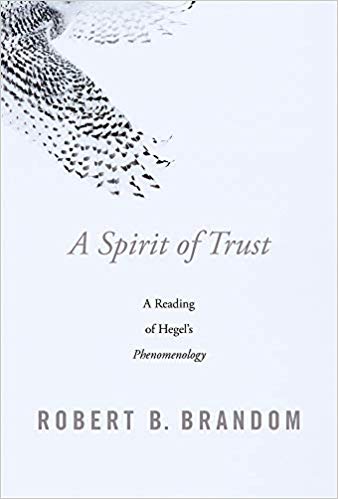
A Spirit of Trust: Wednesday, 11am, Room 508, Philosophy Building

(alternates with Philosophy of Mind)

Email: fintan.mallory@kcl.ac.uk

Phenomenology in Analytic Philosophy: Wednesday 3pm, Room 508, Philosophy Building

Email: gregor.boes@kcl.ac.uk

Minorities and Philosophy: Date/Time varies

Email: alice.c.wright@kcl.ac.uk 

The Formal Methods Group

Friday, 2-4, Room 508

Keep an eye on the Events tab for more updates!

← Older posts
Newer posts →

Tags

ancient philosophy Andrea Sangiovanni applied ethics art Art and Philosophy British Society for the History of Philosophy Clayton Littlejohn conference conferences David Papineau early modern philosophy employment epistemology ethics Events formal epistemology Formal Methods graduate students guest speakers History of Philosophy Hobbes interview Jessica Leech jobs John Callanan Julien Dutant Kant KHOP Maria Rosa Antognazza Mark Textor metaphysics Michael Beaney migration MM McCabe performance art Philosophy Philosophy and Medicine Philosophy in Prisons philosophy of language philosophy of mathematics philosophy of mind political philosophy prizes publications public lecture radio Research at King's Sacha Golob Sarah Fine workshop

Recent Posts

  • Dan Zeman on New Applications of the Assessment-Sensitivity Framework
  • Fabrice Correia and Sven Rosenkranz on Higher-Order Tense Realism
  • Nikolaj Jang Lee Linding Pedersen on AI Epistemology
  • Lowkey Logoian informal: one-day workshop on Aristotelian matters
  • Man-Devil, By John Callanan, Book Launch

Archives

  • November 2025
  • October 2025
  • July 2025
  • March 2025
  • February 2024
  • November 2023
  • July 2023
  • May 2023
  • March 2023
  • February 2023
  • January 2023
  • November 2022
  • October 2022
  • September 2022
  • August 2022
  • July 2022
  • June 2022
  • May 2022
  • April 2022
  • March 2022
  • February 2022
  • January 2022
  • December 2021
  • November 2021
  • October 2021
  • September 2021
  • July 2021
  • June 2021
  • May 2021
  • April 2021
  • March 2021
  • January 2021
  • December 2020
  • November 2020
  • October 2020
  • September 2020
  • July 2020
  • June 2020
  • May 2020
  • April 2020
  • March 2020
  • February 2020
  • January 2020
  • December 2019
  • November 2019
  • October 2019
  • September 2019
  • April 2019
  • March 2019
  • February 2019
  • January 2019
  • December 2018
  • November 2018
  • October 2018
  • September 2018
  • July 2018
  • June 2018
  • May 2018
  • April 2018
  • March 2018
  • February 2018
  • January 2018
  • December 2017
  • November 2017
  • October 2017
  • September 2017
  • August 2017
  • July 2017
  • June 2017
  • May 2017
  • April 2017
  • March 2017
  • February 2017
  • January 2017
  • December 2016
  • November 2016
  • October 2016
  • September 2016
  • June 2016
  • May 2016
  • April 2016
  • March 2016
  • February 2016
  • October 2015
  • September 2015
  • July 2013
  • May 2013

Categories

  • Announcements
  • Conference reports
  • Essays
  • Events
  • Formal Methods
  • History of Philosophy
  • Ideas
  • Interviews
  • Kant
  • KHOPS
  • Mind, Metaphysics, Psychology
  • News
  • philosophy of science
  • Public engagements
  • Public talks
  • Rationality
  • Reading Groups
  • Research
  • Resources
  • Seminars
  • Uncategorized
  • Workshops

A WordPress.com Website.

  • Subscribe Subscribed
    • King's Philosophy
    • Join 241 other subscribers
    • Already have a WordPress.com account? Log in now.
    • King's Philosophy
    • Subscribe Subscribed
    • Sign up
    • Log in
    • Report this content
    • View site in Reader
    • Manage subscriptions
    • Collapse this bar
 

Loading Comments...