• About
  • News
  • Events
    • Seminars
    • Public talks
  • Research
    • Formal Methods
    • Moral, Legal, and Political Philosophy
    • History of Philosophy
    • Rationality, Action, and Mind
    • Metaphysics and Science
  • Ideas
    • Interviews
    • Essays
  • Resources
  • Department Events Calendar

King's Philosophy

~ Official blog of the philosophy department at King's College London.

King's Philosophy

Category Archives: Research

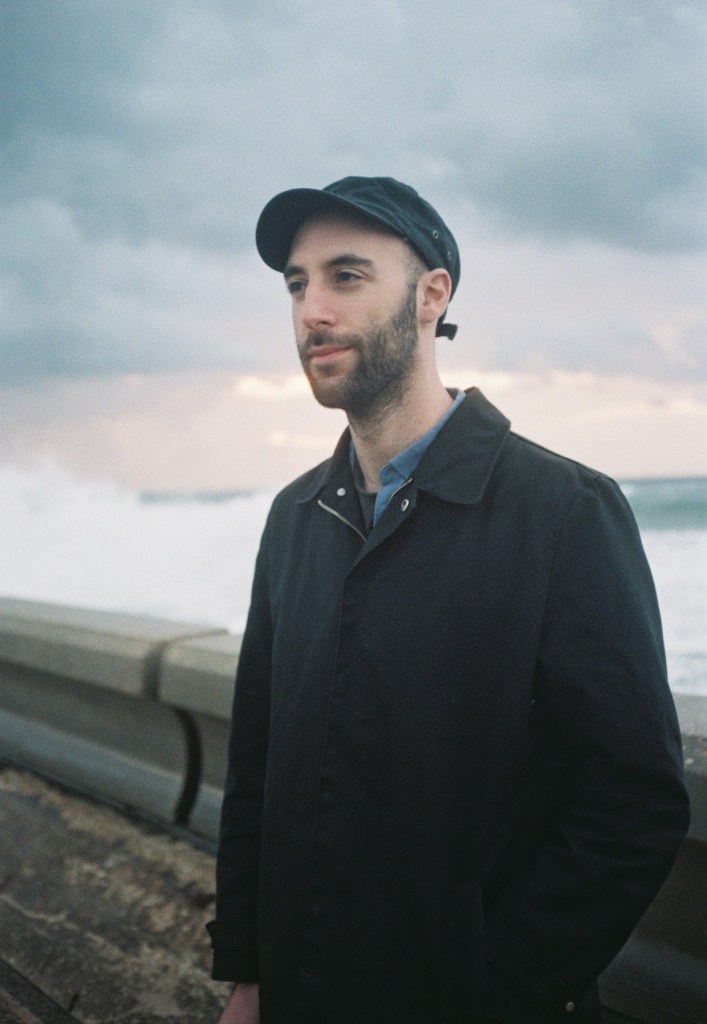
New to the Department: Alexander Franklin

06 Thursday Feb 2020

Posted by fmallory in Announcements, Ideas, News, Research, Uncategorized

≈ Leave a comment

Photo by Justin Hamilton

Where where you before coming to King’s?

I did my PhD and MPhilStud at King’s, so I’ve been here since 2013. However, most recently I came here from Bristol where I was a postdoc on a project with the grand title ‘The Metaphysical Unity of Science’. The great thing about that project is that it allowed me to work on my own research while also giving me the chance to collaborate with the other postdocs (Vanessa Seifert and Toby Friend) on exciting topics. The products of these collaborations should be completed soon!

How did you become interested in philosophy?

I’m lucky enough to have been introduced to philosophy from a very young age by my dad (who also has a PhD in philosophy). Throughout my childhood and later life we’d go on walks on Hampstead Heath discussing philosophy (though not necessarily calling it that) as well as various religious Jewish texts. So, it’s not clear to me that I’ve ever not been into philosophy. The choice to study philosophy professionally was likely motivated in part by the desire to keep up with the conversations when Oliver Black (a schoolfriend of my Dad’s) would join us on these walks! But I really became excited when, as an undergraduate, I started learning about the philosophy of physics!

Your work involves the role of emergence in science, do you think there is a single concept of emergence applicable across different levels of scientific explanation or are we talking about different things? 

That’s a good question, and a difficult one to answer. In my more hubristic moments, I think that everyone is talking about the same thing, and that the account of it that I defend with Eleanor Knox, is the one to which everyone should appeal! I do think that many of the uses of the term ‘emergence’ across science have a lot in common with each other, and that, if one wants to use the philosophical jargon, scientists are mainly talking about weak ontological emergence (in its synchronic or diachronic forms). I think that strong emergence is almost exclusively found within philosophy (and that’s one reason to be sceptical of it!). Having said all that, it’s worth noting that I’ve read much more physics than any other science, and so my views should not be taken to result from a systematic study of the literature. 

It has been argued in the past that special sciences are autonomous from more fundamental sciences. Do you think that we can ever give an explanation of this autonomy or will it remain a mystery?

The boring answer to this question is that it depends on how ‘autonomy’ is defined. A fair few philosophers assume (explicitly or implicitly) that autonomy is the kind of thing that just can’t be explained – that if a science is autonomous then the relations between it and the lower-level sciences aren’t the sorts of relation which allow for explanation of that autonomy. My view is that, while there’s a sense in which the special sciences are clearly autonomous, that’s a sense which is compatible with explaining how that autonomy comes about. 

The basic idea is that autonomy corresponds to a kind of stability: my desk is autonomous because it will look the same even while its constituent particles are continually jiggling about. So part of explaining autonomy is explaining why the jiggling about of the particles just doesn’t make a difference to the macroscopic properties of the table. Once we’ve made this conceptual shift, then we can repurpose a great many scientific explanations to explanations of autonomy: the table’s autonomy is explained by the theories which tell us about how the particles are arranged in a lattice, and how wood is cohesive etc. I’ve written a paper about this that’s currently under review, so hopefully it’ll all be public soon!

Is there a philosophical idea that you endorse and that most people don’t but should?

I think that there may well be no fundamental level – that we may continue describing the world ever more precisely for ever and ever!

King’s College London Peace Lecture: Prof Cécile Fabre (10th of March)

05 Wednesday Feb 2020

Posted by fmallory in Announcements, Events, Ideas, News, Research

≈ Leave a comment

The King’s College London Peace Lecture will be given this year by Prof Cécile Fabre on the topic, ‘Snatching Something From Death’: Value, Justice, and Humankind’s Common Heritage

Professor Fabre is a Senior Research Fellow of All Souls College, Oxford,  Professor of Political Philosophy at the University of Oxford and a Fellow of the British Academy. She is the author of Justice in a Changing World, Whose Body is it Anyway? Justice and the Integrity of the Person, and in 2012 Cosmopolitan War.

Cécile Fabre has just completed an eight year long project on the ethics of war and peace. She is also working on the ethics of economic statecraft and on the ethics of espionage.

The lecture will be in Bush House Lecture Theatre 1 on Tuesday the 10th of March

The lecture will begin at 6.30pm till 8pm with a reception afterwards

Abstract

When Notre-Dame Cathedral was engulfed by fire on April 15, 2019, the world (it seemed) watched in horror. On Twitter, Facebook, in newspapers and on TV cables ranging as far afield from Paris as South Africa, China and Chile, people expressed their sorrow at the partial destruction of the church, and retrospective anguish at the thought of what might very well have happened – the complete loss of a jewel of Gothic architecture whose value somehow transcends time and space. My aim in this lecture is to offer a philosophical account and defence of the view that there is such a thing as humankind’s common heritage, and that this heritage makes stringent moral demands on us. I first offer an account of the universal value of (some) heritage goods, and then offer a conception of justice at the bar of which we owe it to one another, but also to our ancestors and successors, to preserve that heritage.

Peter Adamson: From Known to Knower

31 Friday Jan 2020

Posted by fmallory in Announcements, Events, History of Philosophy, Ideas, News, Uncategorized

≈ Leave a comment

Peter Adamson (KCL, LMU Munich) will be speaking to the department about on Friday 28th February, 3-5pm in Room 508 of the Philosophy Building.

The title of his talk is “From Known to Knower: Affinity Arguments for the Mind’s Incorporeality in the Islamic World”

Prof. Adamson’s latest book Classical Indian Philosophy will be released by Oxford University Press in March.

Reading Groups this Term

22 Wednesday Jan 2020

Posted by fmallory in Announcements, Ideas, News, Reading Groups, Research, Uncategorized

≈ Leave a comment

The zoom and download functions are not active for this image.

This term will see a host of reading groups, some familiar, some new, all open to everyone. So why not drop by? 

Philosophy of Action

Monday 1pm, Room 508, Philosophy Building

Focus: Go beyond the ‘Standard Story’?

Email:  daniel.elbro@kcl.ac.uk, william.meredew@kcl.ac.uk or chengying.guan@kcl.ac.uk

Philosophy of Medicine

Thursday, 4pm, Room 508, Philosophy Building

Email: harriet.fagerberg@kcl.ac.uk

Philosophy of Race

Thursday, 10am, Room 508, Philosophy Building

Email: mirjam.faissner@kcl.ac.uk

(Mostly) Metaphysics  Reading Group

Wednesday, 12:30-2pm, Room 508, Philosophy Building

Email: roope-kristian.ryymin@kcl.ac.uk

Philosophy of Mind

Wednesday, 11am, Room 508, Philosophy Building  

Email: patrick.butlin@kcl.ac.uk

Phenomenology in Analytic Philosophy

Wednesday 3pm, Room 508, Philosophy Building

Email: gregor.boes@kcl.ac.uk

Minorities and Philosophy

Venue varies

Email: alice.c.wright@kcl.ac.uk 

A Spirit of Trust

Time and place to be determined [starting after the reading week]

Email: fintan.mallory@kcl.ac.uk

Inaugural London Post-Kantian Workshop

03 Tuesday Dec 2019

Posted by fmallory in Announcements, Events, History of Philosophy, Kant, News, Workshops

≈ Leave a comment

Image result for kant

On the 10th of December, King’s will be hosting the inaugural London Post-Kantian workshop on the topic ‘Philosophy’s Relationship to Pre-Philosophical Experience’. The workshop will feature papers on Kant, Hegel, and Wittgenstein.

Programme  

1000-1015: Welcome to LPKS and King’s

1015-1130: Stephen Houlgate (Warwick) ‘The Presuppositions of Hegel’s Presuppositionless Logic’

1130-1200: Refreshments

1200-1315: Danièle Moyal-Sharrock (Herts) ‘Wittgenstein’s Non-Intellectual Epistemology’

1315-1415: Lunch at KCL (Provided)

1415-1530: Sacha Golob (KCL) ‘Innocence and the Phenomenological Method’

1530-1545: Break

1545-1700: Martin Sticker (Bristol) ‘Kant on the Common Rational Cognition of Duty Prospects and Problems’

1700-1730: Group Discussion of LPKS Future Events

1730: Close, Drinks.

Location

Tuesday 10th December, Small Committee Room, Strand Campus, King’s College London

Registration

Please Register at https://www.eventbrite.co.uk/e/lpks-workshop-1-philosophys-relationship-to-pre-philosophical-experience-tickets-74960215021

Maps and Access https://www.kcl.ac.uk/visit/strand-campus

Questions to londonpostkantianseminar@gmail.com

KHOPS – 08/11/19 – Peter Dews – ‘Transcendental and Objective Idealism in Schelling’s Early Philosophy’

05 Tuesday Nov 2019

Posted by jjcallanan in Events, History of Philosophy, KHOPS, Seminars, Uncategorized

≈ Leave a comment

Tags

#Schelling, KHOPS

King’s History of Philosophy Seminar will meet regularly throughout the academic year at King’s College London.  The Seminar aims to promote discussion of methods and approaches to the History of Philosophy as well as of thinkers and topics within the tradition.  We wish to encourage contextual and interdisciplinary perspectives, and welcome researchers in disciplines such as History, Theology, and Political Theory as well as Philosophy.  Meetings take place on Fridays from 11am to 1pm.  All welcome. For inquiries contact John Callanan (john.callanan@kcl.ac.uk)

This Friday we are welcoming Peter Dews (https://www.essex.ac.uk/people/dewsp24209/peter-dews)

Peter Dews

who will be speaking on ‘Transcendental and Objective Idealism in Schelling’s Early Philosophy’  – Philosophy Building, Room 405 – 11am-1pm,

A Welcome from KCL MAP

31 Thursday Oct 2019

Posted by fmallory in Announcements, Conference reports, News, Public talks, Reading Groups, Uncategorized

≈ Leave a comment

‘Minorities and Philosophy’ is a network of chapters across UK and US institutions that aims to celebrate the work of philosophers from marginalised backgrounds, and create a space of support for those currently pursuing studies and careers in academic philosophy. 

KCL MAP became a ratified society in 2018 and has since been led primarily by undergraduates. As an academic and social society, we have organised various events, such as weekly reading groups, talks and conferences, film screenings, coffee & tea socials, and other activities. 

As a campaign group, we have worked with our department to address various MAP related issues. Last year, the department held a ‘Women in Philosophy’ lunch, and this year, the department will hold a similar lunch for “BME” undergraduates. These events aim to open up discussions about various experiences people have in the discipline and offer support for those considering further study. 

MAP has also held a workshop with the department on the issue of diversifying the curriculum. This year, we will commence our first working group meeting focusing on this issue, comprised of students from all levels of study, as well as both junior and senior members of staff from various sub-disciplines.

KCL MAP aims to be interdisciplinary, often attracting people from multiple areas of interest. We aim to create a space of learning outside the mainstream canon, which is both inclusive and productive. People from all areas of research, both inside and outside the academy, are welcome to our events. We firmly believe that philosophy ought to be accessible for everyone who wishes to engage!

To contact us or keep updated with events, email us at mapforthegap.kcl@gmail.com 

Or check out our Facebook page: https://www.facebook.com/kclmap/

Signed KCL MAP committee,

Willa Saadat, Alice Wright, Astrid Oredsson, Jelena Milosavljevic, Arthur Taylor, Gayatri Menon

New to the Department: Katharine O’Reilly, Lecturer in Ancient Philosophy

16 Wednesday Oct 2019

Posted by fmallory in Announcements, History of Philosophy, Ideas, Interviews, News, Uncategorized

≈ Leave a comment

Continuing our series of interviews with new members of staff, we have Dr. Katharine O’Reilly.

Katharine (and Roscoe)

Where were you before coming to Kings?

Immediately before coming to King’s I wrote my D.Phil at University College Oxford, but there’s also a sense in which I have been at King’s for nearly a decade. I took the M.Phil Stud. in Ancient Philosophy here from 2010-2014, I have been a GTA from then until now, and in 2018-19, the year I was finishing my D.Phil, I held the Analysis Trust Studentship here in the Department. I’ve also worked on two projects in the Department for a number of years: the Ancient Commentators on Aristotle Project, and the British Journal for the History of Philosophy. As you can probably tell, I’m a very big fan of King’s Philosophy (and now Classics! I’m cross-appointed there). 

What got you into philosophy?

When I started University in Canada (University of Toronto) I didn’t really know what philosophy was. But having been at French Immersion schools up until then, it turns out I had been exposed to good deal of philosophy, by way of authors such as Camus and Voltaire. I thought I would be an English major, but in North America you don’t have to declare right away, and can take a breadth of courses in the first year. I signed up to Mark Kingwell’s Introduction to Philosophy because the reading list looked so great. I was immediately hooked. 

One focus of your research is prudentialism in the ancient world. Could you tell us what attracted you to this? 

My research is broadly interested in ancient moral psychology, and within that realm, I’m particularly interested in prudentialism in the sense of the strategies ancient thinkers and schools recommend for conceiving of and concerning oneself with ones own good. I became interested in this topic by observing the diversity of approaches to thinking about ourselves and our lives in ancient texts. Some suggest we think about our future selves and their good, some our lives as a whole, some our posthumous good, some the recollected goods of our past. I became very interested in the way this kind of autobiographical and prudential thinking underlies the strategies and therapies different figures recommend their followers adopt in order to bring about the right kind of self-interest. So far I have been considering these issue within the thought of Plato, Aristotle, and the Hellenistic schools.

You’ve argued that Plato isn’t as strictly opposed to hedonism as he is sometimes made out to be. What have we been getting wrong about him? 

Plato is often characterised as decidedly anti-hedonist. He presents Socrates in dialogue with hedonists repeatedly, and that is usually to critique them, and show that the life they thought they could pursue, with pleasure as its goal, isn’t one they can or should pursue successfully. What this reading misses out, I think, is Plato’s deep and sustained interest in pleasure and the role it ought to play in our lives. He is anything but dismissive of hedonist arguments: he takes them seriously again and again, and even devotes an entire late dialogue (the Philebus) to thinking about the nature of pleasure. That doesn’t mean that Plato is a fan of hedonism, or isn’t critical of it, but what I think it does mean is that he is interested enough in the arguments to develop multiple analyses of the psychology of pleasure and pain. If we read Plato as too dismissive of hedonism, we risk missing the insights these discussions provide. So I would rather characterise Plato as being fascinated by pleasure.

Is there a philosophical idea that you endorse that most people don’t but should?

I think the Cyrenaic advice about anticipating future pain is far more effective than most people give it credit for.

Wouldn’t it be better to be a jellyfish?

Not according to Plato (or so I argue here)! But as the deadlines stack up, it is tempting…

New to the Department: Ethan Nowak, Leverhulme Early Career Fellow

14 Monday Oct 2019

Posted by fmallory in Announcements, Ideas, Interviews, Research, Uncategorized

≈ Leave a comment

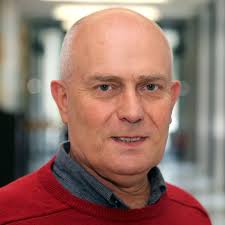
  • Ethan, left

Where were you before coming to Kings?

After finishing my PhD at UC Berkeley, I spent a few years at UCL as a teaching fellow, and some time at Umeå University in Sweden—which by the way is a great place to do philosophy—as a research fellow. 

What got you into philosophy?

When I first started as an undergraduate, I thought I’d do a degree in biology. I took a logic course in my first year, though, and that changed everything. 

You’ve written about the philosophical implications of language death. What is lost when we lose a language?

There are too many things to list! In the stuff I’ve written on this question, I’ve tried to call attention to some that I think are both particularly important and a bit hard to see. For example, while philosophers mostly reject the idea that there are things you can say in one language that you can’t say in any other, I think there is space open for us to think that there are things you can do in one language that you can’t do in any other. This means that when a language is lost, so is a class of possible actions. Since I think the space of possible things we can do amounts, in a fairly direct way, to the space of people we can be, this is a problematic loss. 

Why do you think philosophers have traditionally overlooked this issue? 

To be honest, I have often wondered this myself. I imagine it has something to do with the fact that you can more-or-less get by these days speaking only English, and probably something to do with the fact that philosophers tend to think of languages as more-or-less interchangeable signaling systems.

Is there a philosophical idea that you endorse that most people don’t but should?

I’d have to say metasemantic pluralism. 

You can find out more about Ethan’s work on his website

The Annual Conference of the British Society for the History of Philosophy at King’s (24-26 April)

30 Tuesday Apr 2019

Posted by Vlad Cadar in Conference reports, History of Philosophy, Research

≈ Leave a comment

Tags

British Society for the History of Philosophy, conference, History of Philosophy

2A8F5698-7F07-442B-9977-F0F2235121CC.jpeg

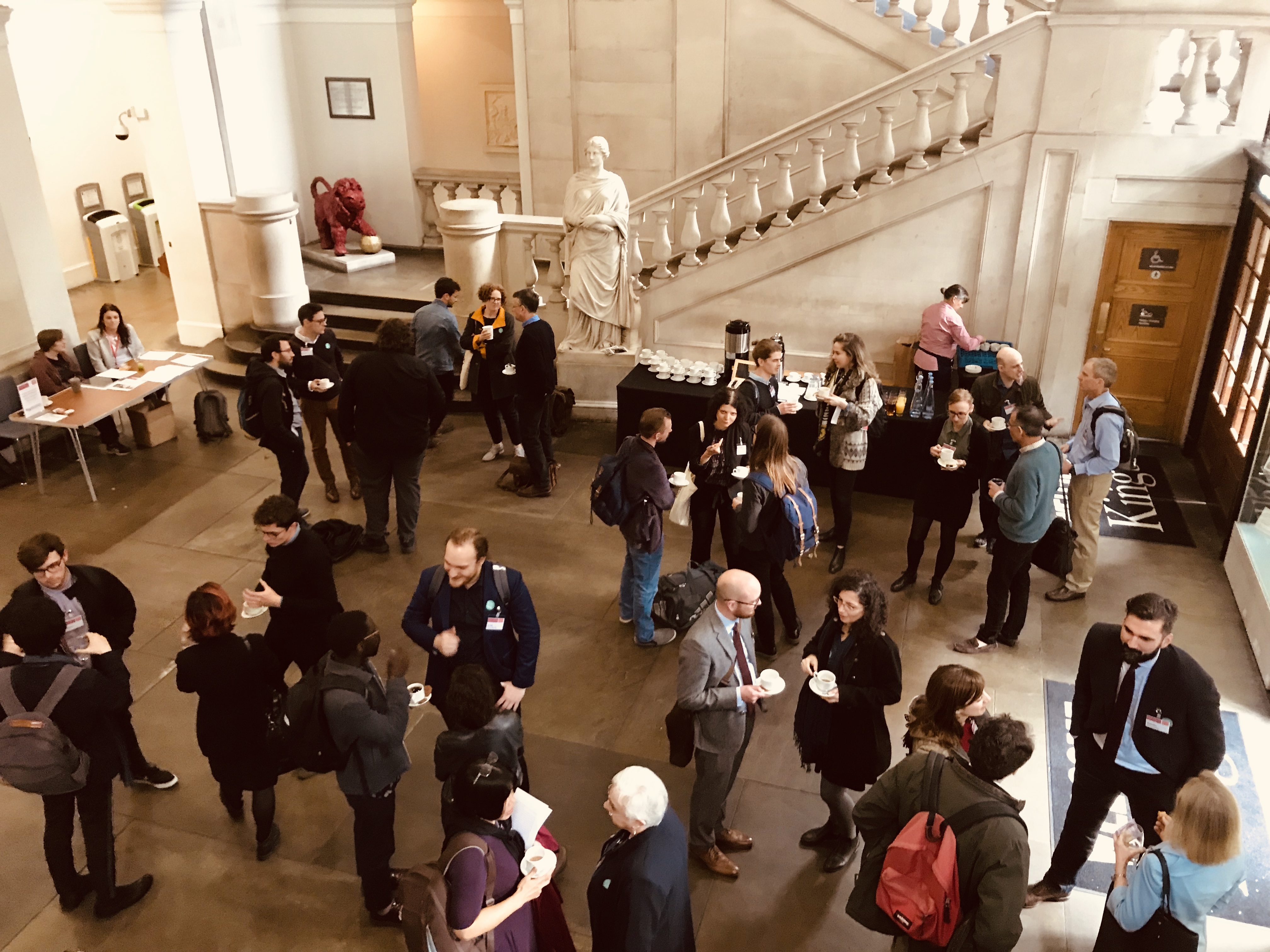
The Annual Conference of the British Society for the History of Philosophy took place at King’s College London on 24-26 April 2019. Over 120 delegates gathered in London for three days of discussion. The conference covered all periods of the history of philosophy, including sessions on Chinese, Islamic, Indian, and other non-western parts of the canon, in nearly 100 papers.

D09E4F06-1563-4CF1-AA11-DCED2CB0C4E0.jpeg

Several KCL faculty, emeritus faculty and students gave papers at the event. Maria Rosa Antognazza delivered the welcome remarks as BSHP Chair. Other King’s speakers included: MM McCabe, Mike Beaney, Richard Sorabji, John Callanan, Jessica Leech, Mark Textor, Katharine O’Reilly, Jon W. Thompson, Carlo Cogliati, and Mike Coxhead.

Conference Programme

***

The British Society for the History of Philosophy (BSHP), launched in 1984, is a registered charity, which exists to promote and foster all aspects of the study and teaching of the history of philosophy. It publishes one of the leading journals in the field, the British Journal for the History of Philosophy (Taylor and Francis), currently based at KCL. Both the BSHP Chair (Professor Maria Rosa Antognazza) and the BJHP Editor (Professor Mike Beaney) are members of King’s Philosophy Department.

← Older posts
Newer posts →

Tags

ancient philosophy Andrea Sangiovanni applied ethics art Art and Philosophy British Society for the History of Philosophy Clayton Littlejohn conference conferences David Papineau early modern philosophy employment epistemology ethics Events formal epistemology Formal Methods graduate students guest speakers History of Philosophy Hobbes interview Jessica Leech jobs John Callanan Julien Dutant Kant KHOP Maria Rosa Antognazza Mark Textor metaphysics Michael Beaney migration MM McCabe performance art Philosophy Philosophy and Medicine Philosophy in Prisons philosophy of language philosophy of mathematics philosophy of mind political philosophy prizes publications public lecture radio Research at King's Sacha Golob Sarah Fine workshop

Recent Posts

  • Fabrice Correia and Sven Rosenkranz on Higher-Order Tense Realism
  • Nikolaj Jang Lee Linding Pedersen on AI Epistemology
  • Lowkey Logoian informal: one-day workshop on Aristotelian matters
  • Man-Devil, By John Callanan, Book Launch
  • KCL-UNC Joint Graduate Conference at King’s on Thursday 15th  and Friday 16th May

Archives

  • October 2025
  • July 2025
  • March 2025
  • February 2024
  • November 2023
  • July 2023
  • May 2023
  • March 2023
  • February 2023
  • January 2023
  • November 2022
  • October 2022
  • September 2022
  • August 2022
  • July 2022
  • June 2022
  • May 2022
  • April 2022
  • March 2022
  • February 2022
  • January 2022
  • December 2021
  • November 2021
  • October 2021
  • September 2021
  • July 2021
  • June 2021
  • May 2021
  • April 2021
  • March 2021
  • January 2021
  • December 2020
  • November 2020
  • October 2020
  • September 2020
  • July 2020
  • June 2020
  • May 2020
  • April 2020
  • March 2020
  • February 2020
  • January 2020
  • December 2019
  • November 2019
  • October 2019
  • September 2019
  • April 2019
  • March 2019
  • February 2019
  • January 2019
  • December 2018
  • November 2018
  • October 2018
  • September 2018
  • July 2018
  • June 2018
  • May 2018
  • April 2018
  • March 2018
  • February 2018
  • January 2018
  • December 2017
  • November 2017
  • October 2017
  • September 2017
  • August 2017
  • July 2017
  • June 2017
  • May 2017
  • April 2017
  • March 2017
  • February 2017
  • January 2017
  • December 2016
  • November 2016
  • October 2016
  • September 2016
  • June 2016
  • May 2016
  • April 2016
  • March 2016
  • February 2016
  • October 2015
  • September 2015
  • July 2013
  • May 2013

Categories

  • Announcements
  • Conference reports
  • Essays
  • Events
  • Formal Methods
  • History of Philosophy
  • Ideas
  • Interviews
  • Kant
  • KHOPS
  • Mind, Metaphysics, Psychology
  • News
  • philosophy of science
  • Public engagements
  • Public talks
  • Rationality
  • Reading Groups
  • Research
  • Resources
  • Seminars
  • Uncategorized
  • Workshops

A WordPress.com Website.

  • Subscribe Subscribed
    • King's Philosophy
    • Join 242 other subscribers
    • Already have a WordPress.com account? Log in now.
    • King's Philosophy
    • Subscribe Subscribed
    • Sign up
    • Log in
    • Report this content
    • View site in Reader
    • Manage subscriptions
    • Collapse this bar
 

Loading Comments...